 Men’s Moto Leather Jackets
 Faux Moto Leather Jacket
 Vintage Moto Leather Jacket
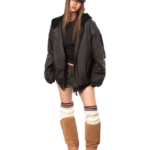 Women’s Moto Leather Jackets
 Faux Moto Leather Jacket
 Vintage Moto Leather Jacket Women
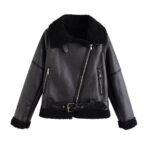 Cropped Moto Leather Jacket Women
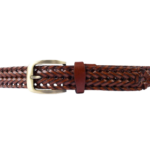 Men’s Leather Belts
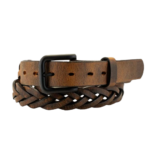 Full-Grain Leather Belt – Men
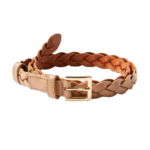 Braided Leather Belt – Men
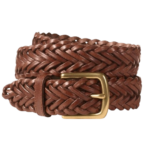 Leather Dress Belt – Men
 Leather Wallets
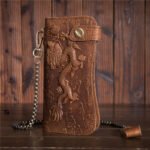 Full- Grain Leather Wallets
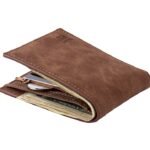 Tri-Fold Leather Wallets
 Saddleback Leather Wallets
 Moto Gloves
 Moto Heated Gloves
Horsehide vs. Cowhide: What Vintage Leather Buyers Actually Need to Know

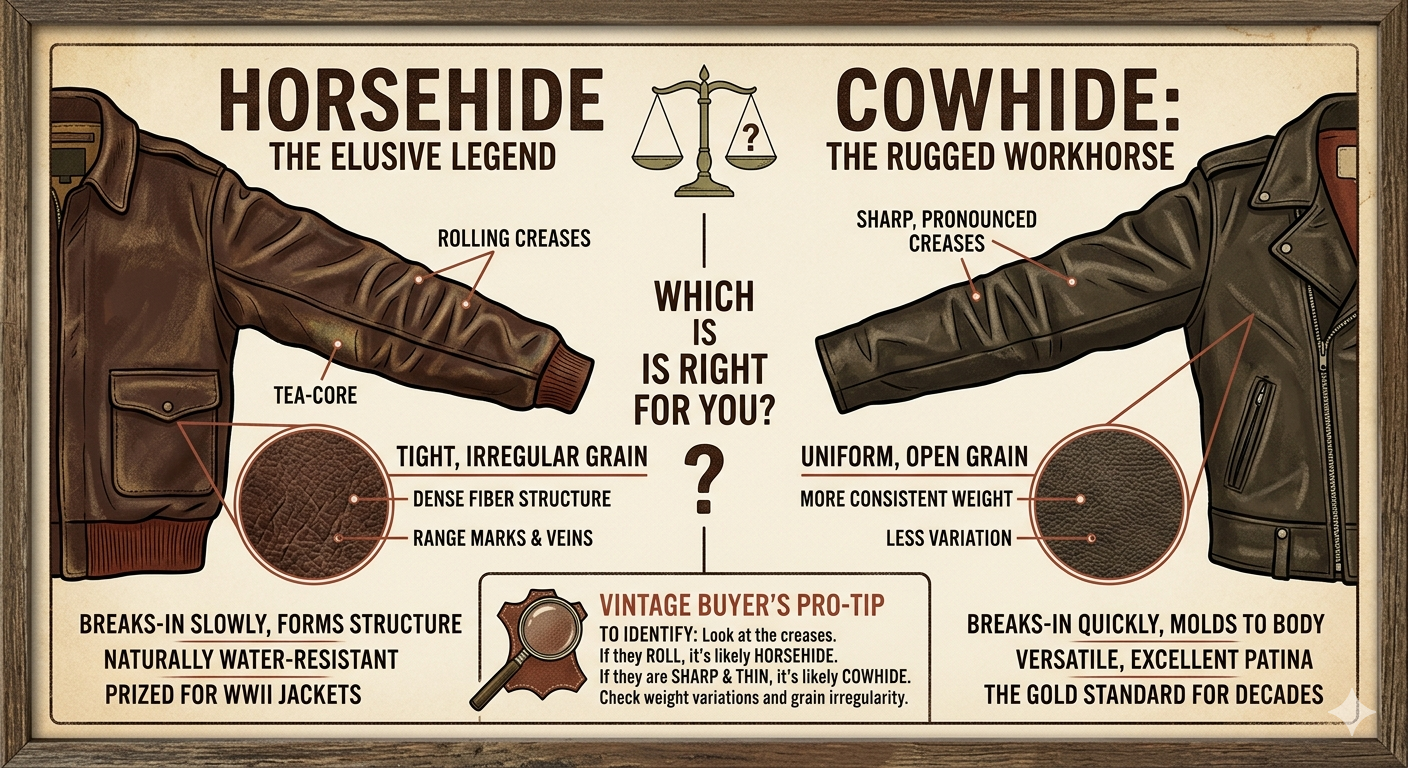
The horsehide vs cowhide motorcycle jacket debate comes up constantly in vintage leather circles — and too often it gets reduced to “horsehide is better, full stop.” That’s not wrong exactly, but it’s not useful either. What buyers actually need is a working understanding of how the two materials differ, how they age, what they feel like to wear, and when each one is suitable for a given purchase.
This is the guide. No mythology, no oversimplification — just what the best leather for biker jacket construction actually means in practice, depending on what you’re buying for.
—
What Makes Horsehide Different
Horsehide leather jacket construction was the dominant choice for American moto jackets from roughly the 1920s through the early 1960s. It wasn’t chosen for reasons of tradition or prestige — it was chosen because horsehide is objectively a more demanding material that produces superior performance characteristics in certain key areas.
Horse hides are smaller and thinner than cattle hides, and the collagen fiber structure is oriented differently — tighter, denser, with a smoother natural grain. This produces a leather that is:
Denser and more resistant to abrasion. For a jacket intended to protect a rider in a fall, this matters enormously. Horsehide doesn’t break down on initial impact the way softer leathers can.
More wind-resistant. The tight fiber structure means horsehide is naturally more resistant to cold air penetration — a meaningful property when you’re on a motorcycle at highway speeds.
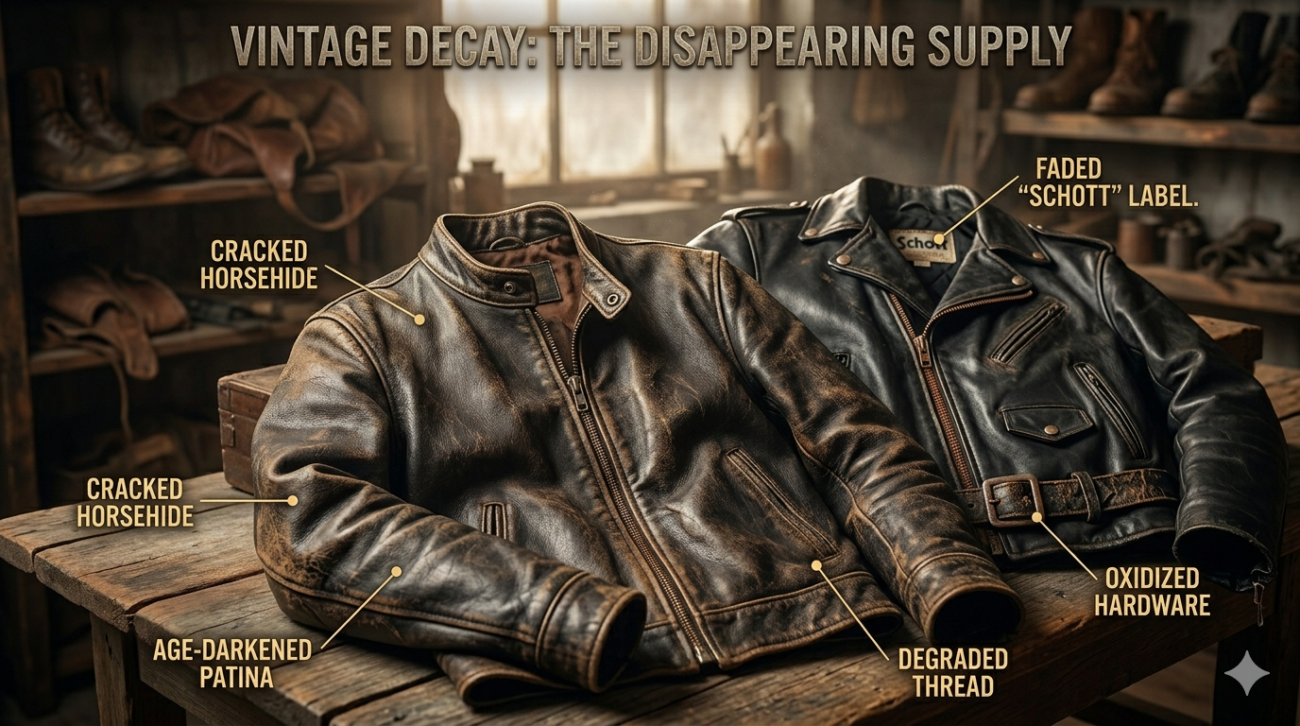
Slower to break in, but more rewarding over time. New horsehide is stiff — genuinely board-like in some cases. This drives some buyers toward cowhide, which softens faster. But the patience pays off: horsehide develops a patina and drape over years of wear that cowhide simply doesn’t replicate. The aged horsehide look — that distinctive sheen, the crease patterns that form exactly where you move — is one of the things vintage leather collectors are specifically paying for.
More scarce. The supply of horsehide for garment leather essentially collapsed in the latter half of the 20th century as horse populations shifted away from working roles. Quality horsehide for jacket construction today is extremely expensive and produced by only a handful of tanneries globally, mostly in Japan. Vintage horsehide pieces represent a material standard that genuinely cannot be replicated at scale.
—
What Cowhide Brings to the Table
Cowhide is not a consolation prize. It’s a different material with different strengths, and understanding those strengths helps you buy more intelligently.
It’s immediately more wearable. Good quality cowhide — full-grain, properly tanned — breaks in within months rather than years. For buyers who want a jacket they can wear comfortably from day one, cowhide is the honest answer.
It’s more available. The vintage market has far more cowhide pieces than horsehide, which means more options at more price points. And contemporary production using quality cowhide gives you access to proper construction at prices that horsehide can’t match.
It ages well within its category. Full-grain cowhide develops real character over time — just a different character than horsehide. The patina is softer, the sheen less pronounced, the crease patterns more diffuse. Many collectors genuinely prefer the aged cowhide aesthetic.
The quality range is enormous. This is where cowhide gets complicated. The gap between top-grain, full-grain cowhide and split/corrected-grain “genuine leather” is the largest quality gap in the entire leather jacket material guide. Great cowhide is great. Budget cowhide is the reason people end up disappointed with leather jackets.
You can [shop horsehide jackets](/shop/horsehide) and compare them directly to our full-grain cowhide options to see these differences for yourself — the construction details and leather spec are clearly listed on every piece.
—
The Vintage Leather Jacket Material Question in Practice
When you’re evaluating an actual jacket, here’s how to think about the material:
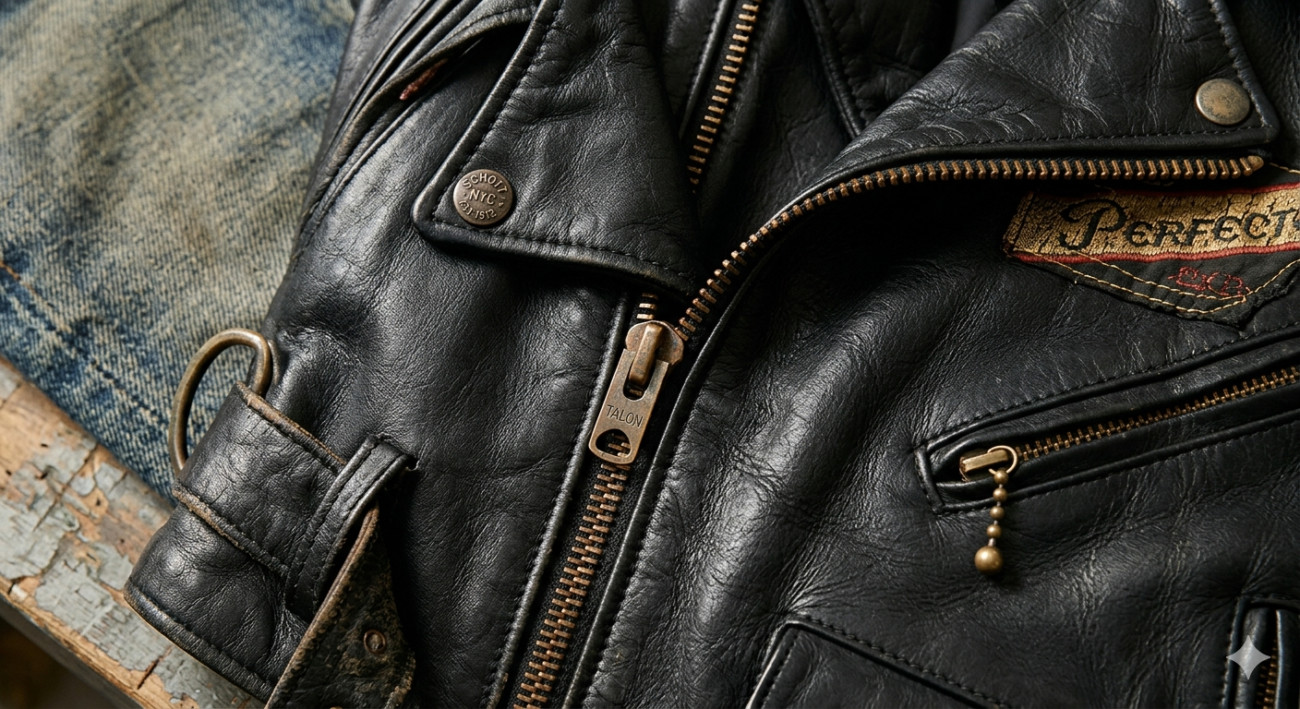
For a vintage purchase (pre-1965): Assume cowhide unless you can confirm horsehide. The tell for horsehide is the grain pattern — very tight and smooth with a slightly waxy surface in its natural state. Horsehide is also noticeably stiffer in structurally intact pieces. If the leather feels immediately supple and breaks easily in your hands, it’s almost certainly cowhide.
For a contemporary purchase: Look past the word “leather” entirely and get to the specific grade. Full-grain leather? What animal? How thick (oz weight)? Which tannery? Brands that can answer these questions with specifics are selling real quality. Brands that can’t, or that lead with “genuine leather” on the label, are selling something categorically different.
For horsehide specifically: The current genuine horsehide market is dominated by Japanese production — Shinki Hikaku and a few other tanneries that maintained quality horsehide production when Western production essentially stopped. Japanese reproduction moto jackets made with these hides are legitimately excellent. Don’t dismiss them because they’re not American-made originals.
—
What the Price Premium Actually Reflects
Horsehide jackets cost more — sometimes significantly more — than comparable cowhide construction. People sometimes read that premium as brand positioning or collector mythology. It isn’t.
The premium reflects:
Genuine material scarcity. Horsehide production is a fraction of what it was in the 1950s. The economics of small-batch specialty leather production are completely different from commodity cowhide.
Processing complexity. Horsehide requires different tanning approaches than cowhide. Getting it right is harder, and the margin for error in producing a premium garment-quality hide is smaller.
Long-term value. A well-preserved horsehide jacket retains and appreciates over time in a way that most cowhide pieces don’t. For buyers who treat their jacket as an asset, the premium isn’t a cost — it’s an investment.
If you want to understand the [leather jacket material guide](/guides/leather-materials) before committing to a purchase, we’ve put together detailed specifications on every grade we work with. Understanding the material is how you avoid paying a premium for something that doesn’t justify it.
—
The Honest Recommendation
Here’s the position most experienced vintage leather buyers land on:
If you want the absolute pinnacle of vintage leather jacket material — the leather that defined the form, that develops the most sought-after patina, that represents the genuine article — horsehide is the answer. Budget for it, be patient with the break-in, and understand you’re acquiring something that genuinely cannot be reproduced at a reasonable price.
If you want an excellent jacket that wears comfortably sooner, offers more variety in the market, and sits at a more accessible price point without compromising on fundamental quality — full-grain cowhide from a reputable construction is a completely legitimate choice. The key is full-grain, properly tanned, with real thickness. Anything below that specification is a different product entirely.
What’s not a good choice: split leather, corrected grain, “genuine leather” labeling without specifics, or anything where the seller can’t tell you what they’re selling. The vintage leather jacket material category is honest — the leather is what it is, and you can tell once you know what to look for.
Browse our Outer Edition’s full-grain leather jackets to see what quality cowhide construction actually looks and feels like. The difference from budget leather is immediately apparent — and it’s the difference between a jacket that becomes a 20-year piece and one you’re replacing in four.