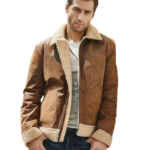
 Men’s Moto Leather Jackets
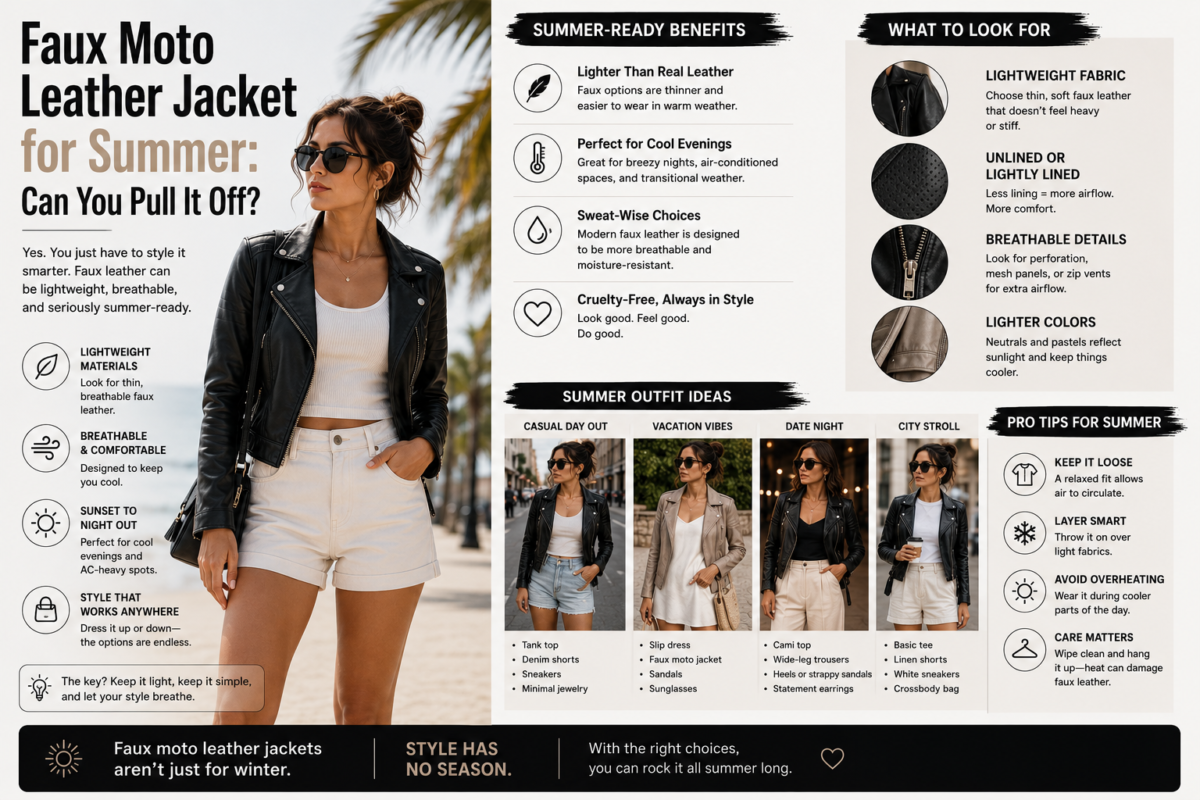
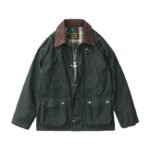 Faux Moto Leather Jacket
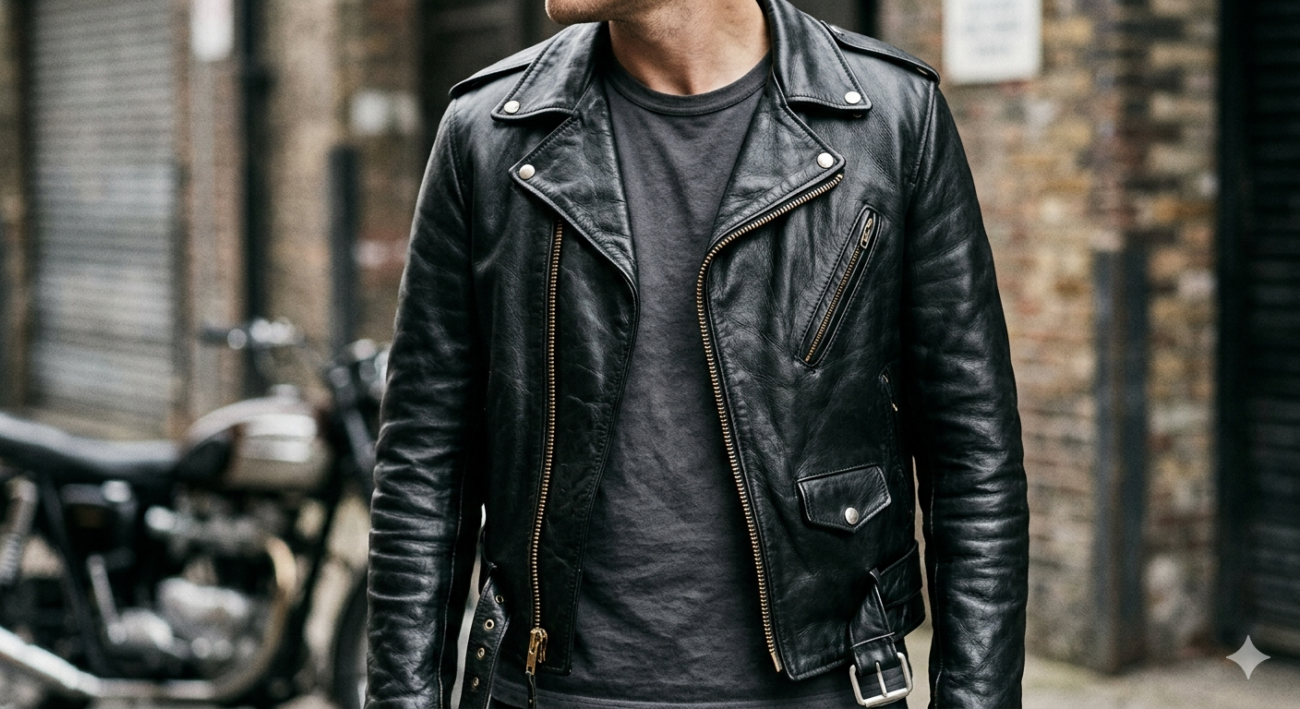
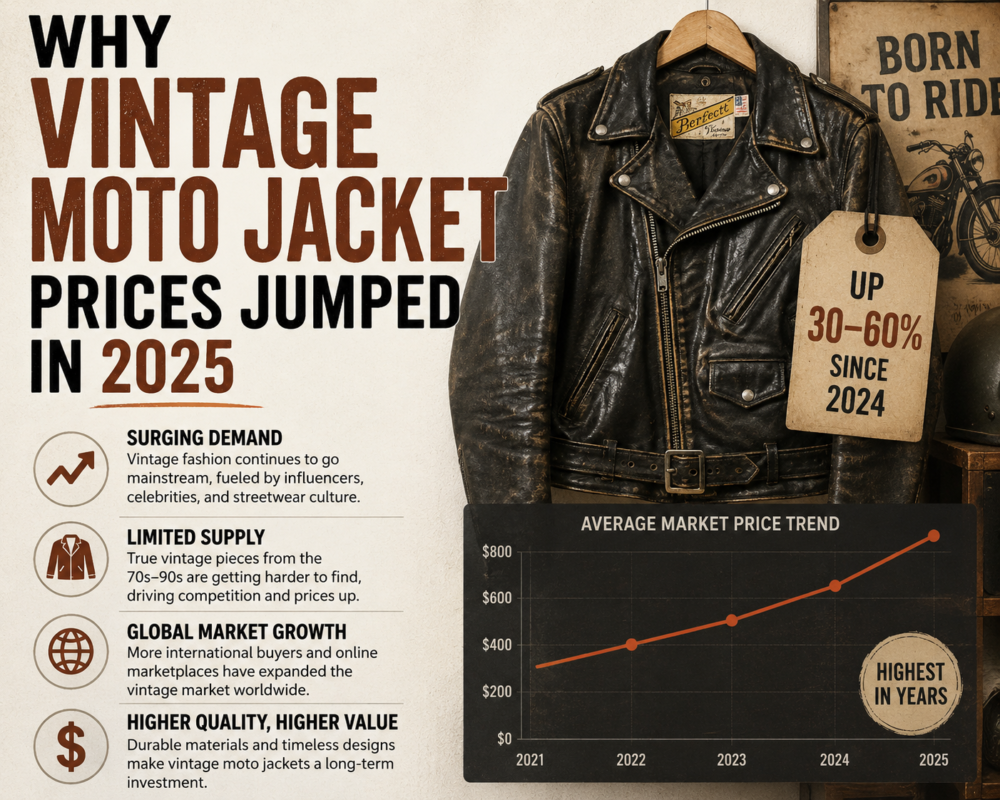
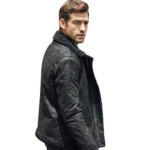 Vintage Moto Leather Jacket
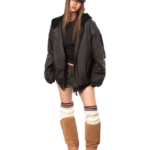 Women’s Moto Leather Jackets
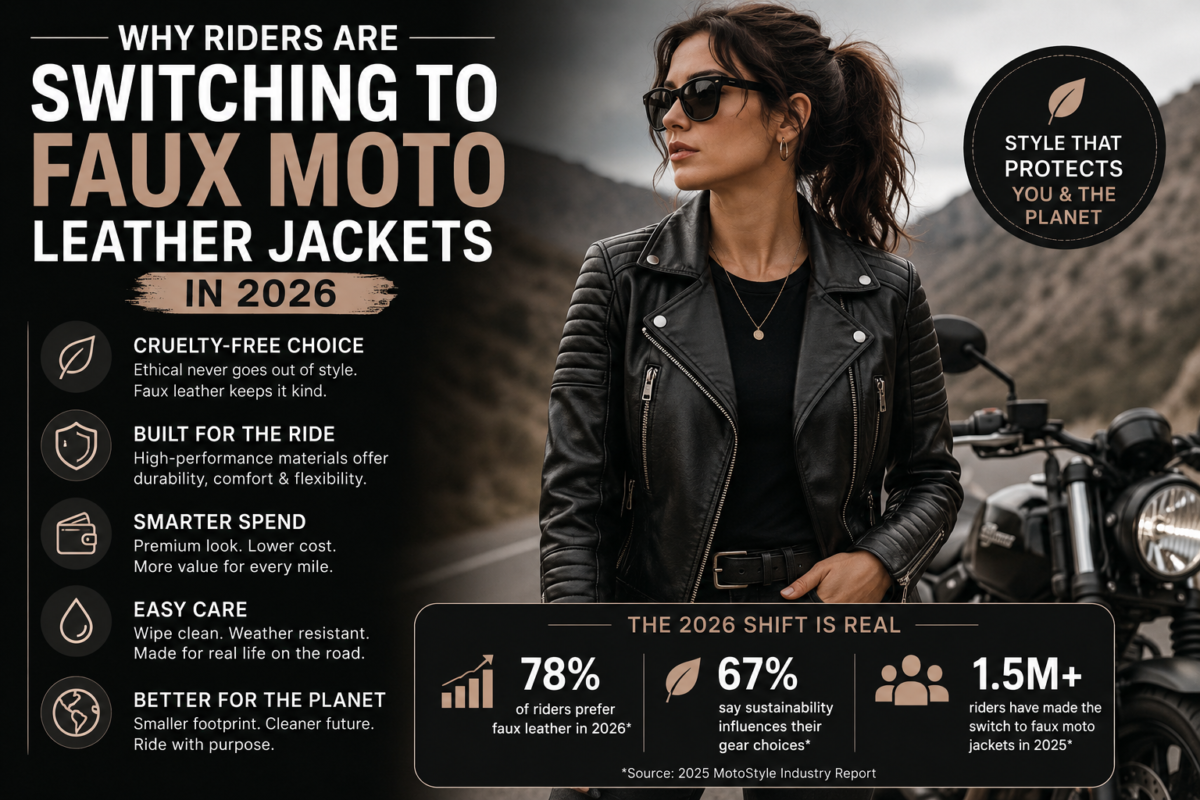
 Faux Moto Leather Jacket
 Vintage Moto Leather Jacket Women
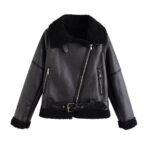 Cropped Moto Leather Jacket Women
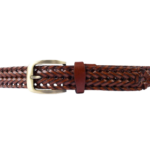 Men’s Leather Belts
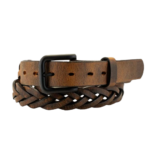 Full-Grain Leather Belt – Men
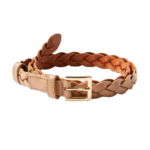 Braided Leather Belt – Men
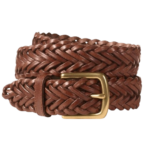 Leather Dress Belt – Men
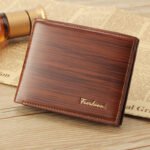 Leather Wallets
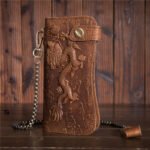 Full- Grain Leather Wallets
 Tri-Fold Leather Wallets
 Saddleback Leather Wallets
 Moto Gloves
 Moto Heated Gloves
What Is a Cafe Racer Jacket? The Complete Rider’s Guide

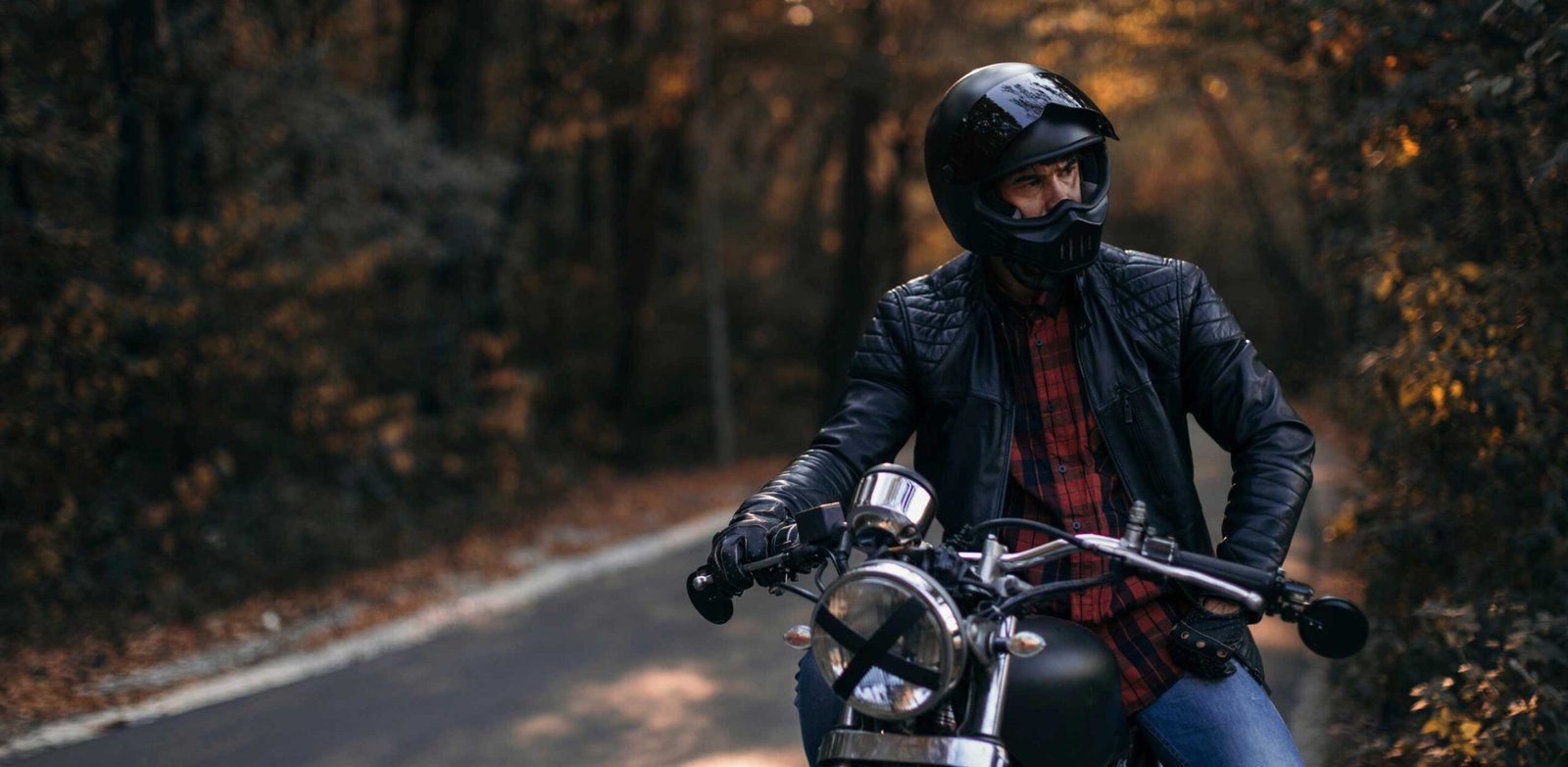
A cafe racer jacket is a short, fitted leather riding jacket defined by a straight center zip, a stand collar, and deliberate minimalism. It is not just the cleanest leather jacket ever built. It is the one that started it all.
That is the quick answer. Here is everything behind it.
Where Did the Cafe Racer Jacket Come From?
The cafe racer jacket came from post-war Britain. Specifically, it came from a youth motorcycle subculture that formed in the late 1950s and ran through the early 1960s.
These riders had a name: the Ton-Up Boys, or Rockers. The term “ton-up” referred to hitting 100 miles per hour. That threshold was the ambition. Hitting the ton on a British A-road, on a bike you had modified yourself, was the whole point.
The bikes they rode became legends. The Triumph Bonneville, the BSA Gold Star, and the Norton Manx were the machines of choice. Each one stripped down to the essentials. Each one pushed hard and handled hard. The riders needed gear that could keep up.
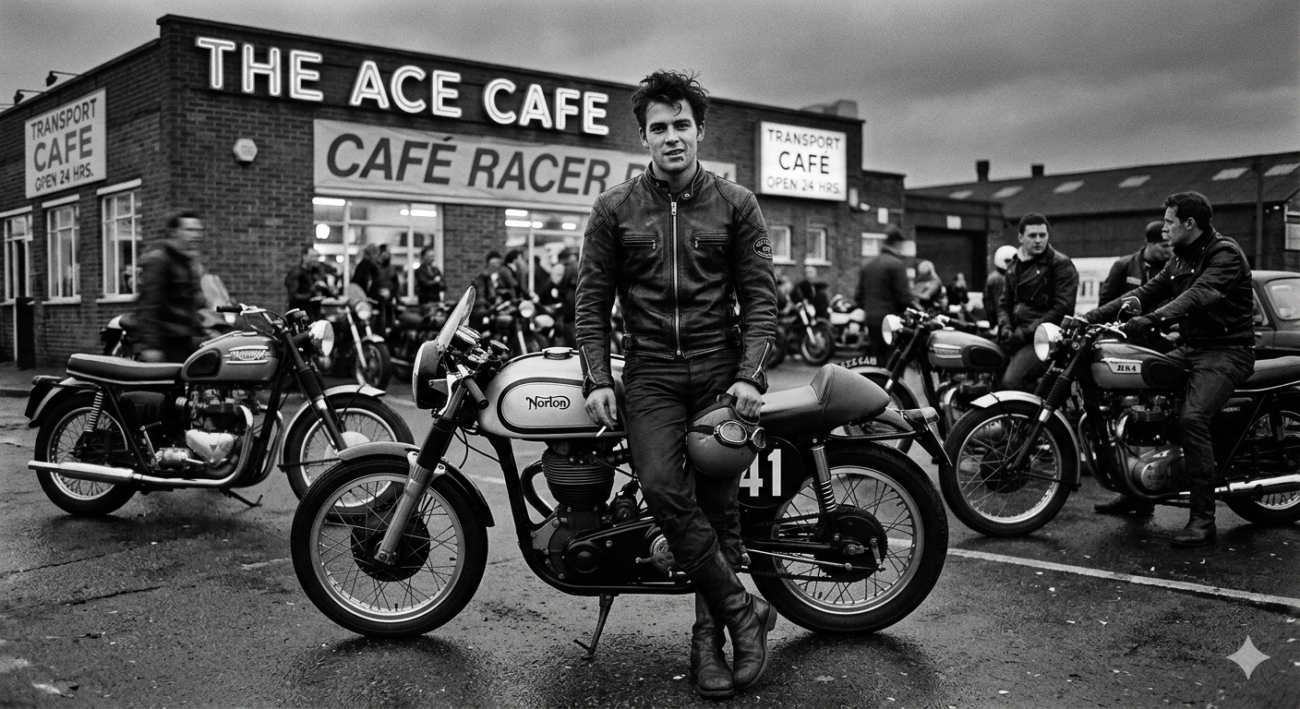
The Ace Cafe on London’s North Circular Road became the spiritual home of the scene. Riders would gather, challenge each other, and run routes between the city’s transport cafes. The jacket they wore had to match the philosophy of the bike: light, minimal, built for function over show.
This was also the era of the Rockers versus the Mods. Mods favored scooters and sharp Italian suits. Rockers favored raw bikes and raw leather. The rivalry between the two groups sharpened the cultural identity of the cafe racer jacket into something specific. Wearing it was a statement about who you were and what you valued.
By the mid-1960s, the jacket had jumped from the road to the mainstream. It never really left.
What Makes a Cafe Racer Jacket Different from a Classic Biker Jacket?
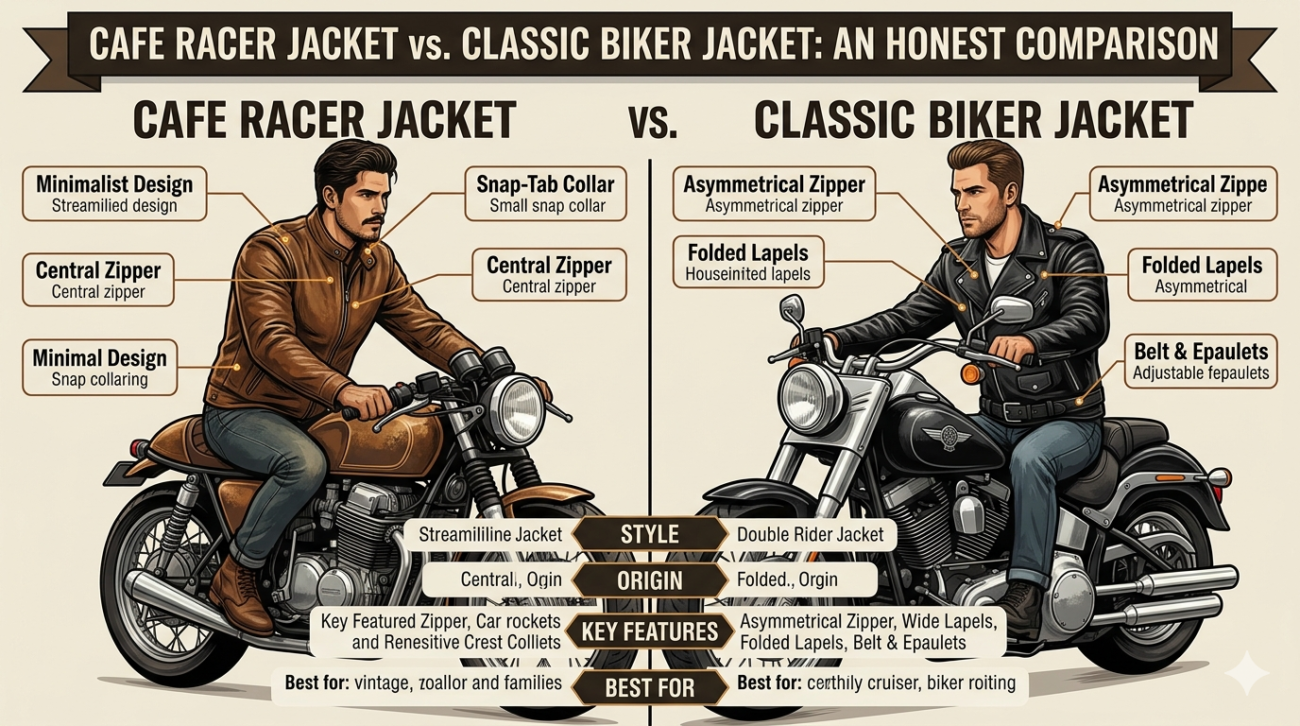
A cafe racer jacket differs from a classic biker jacket in three direct ways.
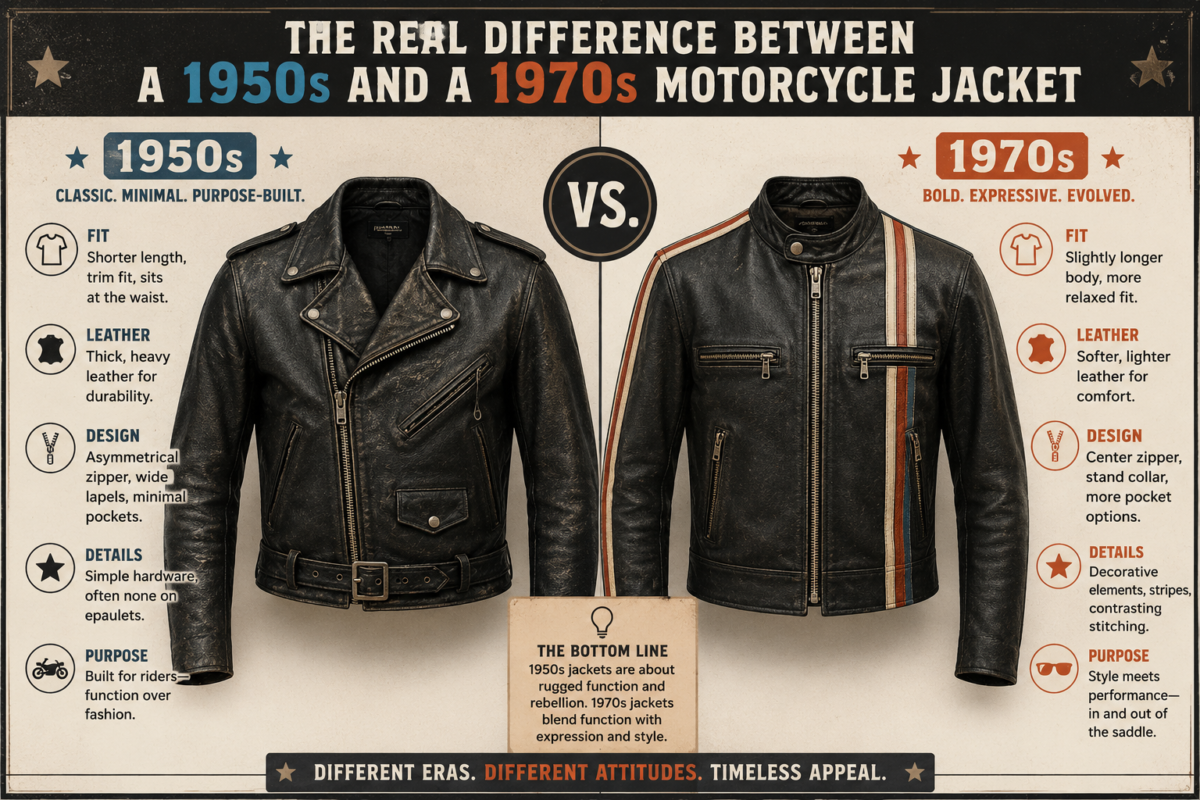
The collar is the first difference. A cafe racer uses a short stand collar, also called a mandarin or band collar. It sits upright, close to the neck, and reduces wind resistance at speed. A classic biker leather jacket uses wide lapels that fold down and create a much more dramatic, rock-and-roll silhouette.
The zipper is the second difference. A cafe racer runs a straight center zip, symmetrically down the front. A classic biker jacket uses an angled diagonal zip offset to one side. That diagonal zip is one of the most recognizable details in outerwear history. It is iconic. But it is also noisier and more decorative.
The hardware is the third difference. Cafe racer jackets are built with restraint. Minimal buckles. No heavy belts. No oversized epaulets. A classic biker jacket carries considerably more metal hardware as part of its aesthetic identity.
The practical result: a cafe racer jacket is more versatile. It works across a wider range of outfits and occasions without dominating the whole look. The biker jacket makes a bigger statement. The cafe racer is harder to get wrong.
What Are the Key Features of a Cafe Racer Jacket?
Here are the specific features that define every genuine cafe racer jacket.
- Stand collar with snap closure. The short, upright collar sits tight against the neck. A snap or throat latch keeps it closed at speed. This was a functional decision. Wind hitting a wide lapel at 90 miles per hour is brutal and disruptive. The stand collar eliminates that problem.
- Straight center zipper. This is the fastest visual identifier. Symmetrical, clean, and simple, the center zip runs straight down the front. One pull and the jacket is sealed.
- Minimal exterior detailing. No unnecessary belts. No decorative buckles. No bulky padding or hardware for its own sake. Clean lines only. This is what gives the cafe racer jacket its longevity as a style piece. It never looks dated because it was never chasing trends to begin with.
- Articulated sleeves. The best cafe racer jackets are cut for riding posture, not standing posture. When your arms reach forward toward bars, the sleeves move with you and stay in place. This feature matters on the road and reads as quality off it.
- Zipped cuffs. Tight at the wrist. Easy to manage with gloves on. The zipped cuff keeps the sleeve locked down and eliminates the flapping and bunching that plagues unzipped cuffs at speed.
- Zippered side pockets. Placed flat and clean. Nothing flopping around. Nothing pulling at the silhouette.
What Is the Difference Between a Cafe Racer Jacket and a Scrambler Jacket?
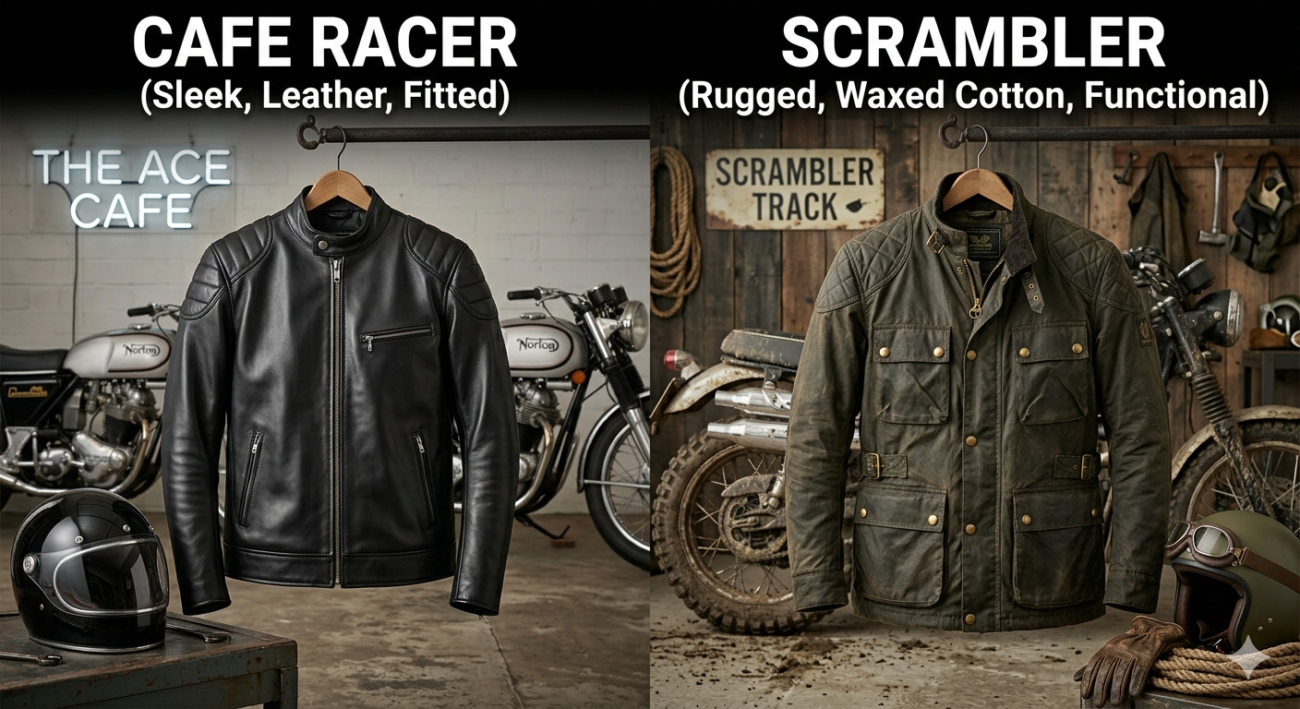
A scrambler jacket is designed for off-road and dual-sport riding. It typically features more ventilation panels, a looser cut that accommodates the over-the-tank posture of off-road riding, and often combines leather panels with textile sections for breathability.
A cafe racer jacket is built for on-road performance at speed. Close-fitting. Streamlined. Oriented toward tarmac and corner carving rather than trail riding.
In terms of style identity, scrambler jackets read adventurous and rugged. Cafe racer jackets read precise and sleek. Both are legitimate. They speak to different riding identities. If you ride a Triumph Scrambler or a Royal Enfield Himalayan, a scrambler jacket fits the bike. If you ride a Kawasaki Z900RS or a Honda CB, a cafe racer jacket makes the conversation.
What Leather Is Best for a Cafe Racer Jacket?
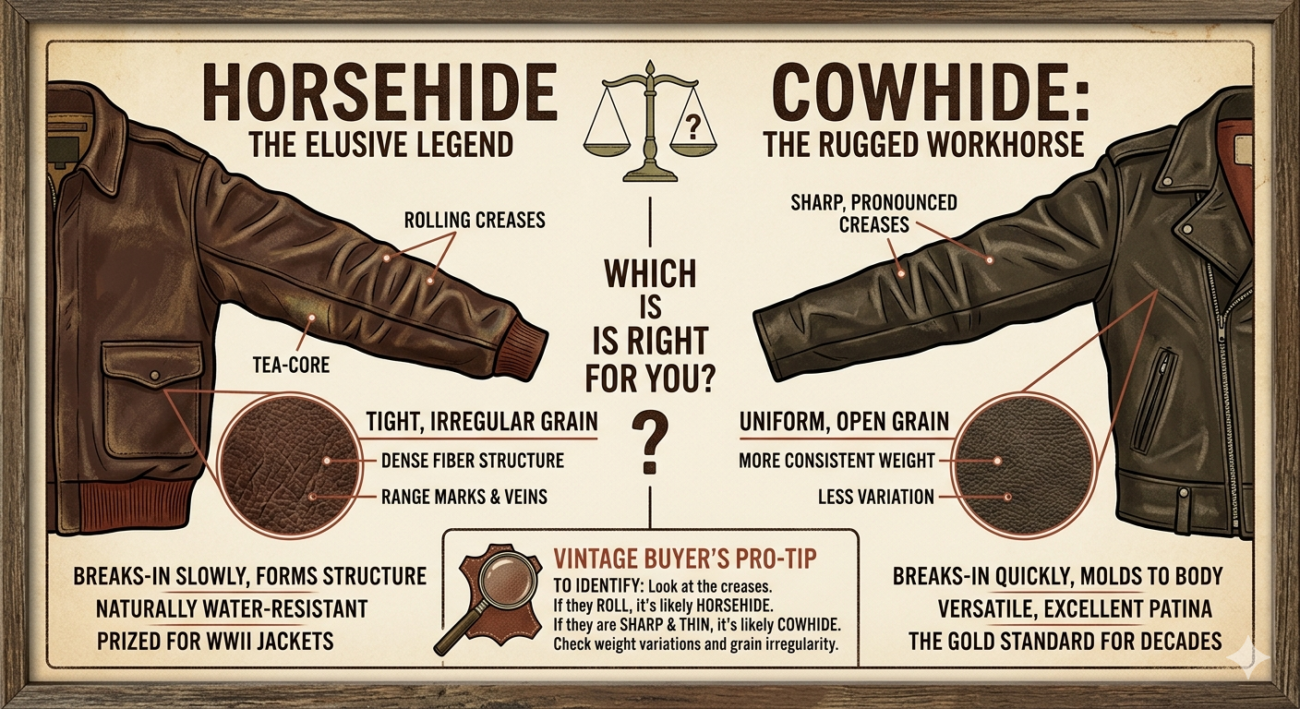
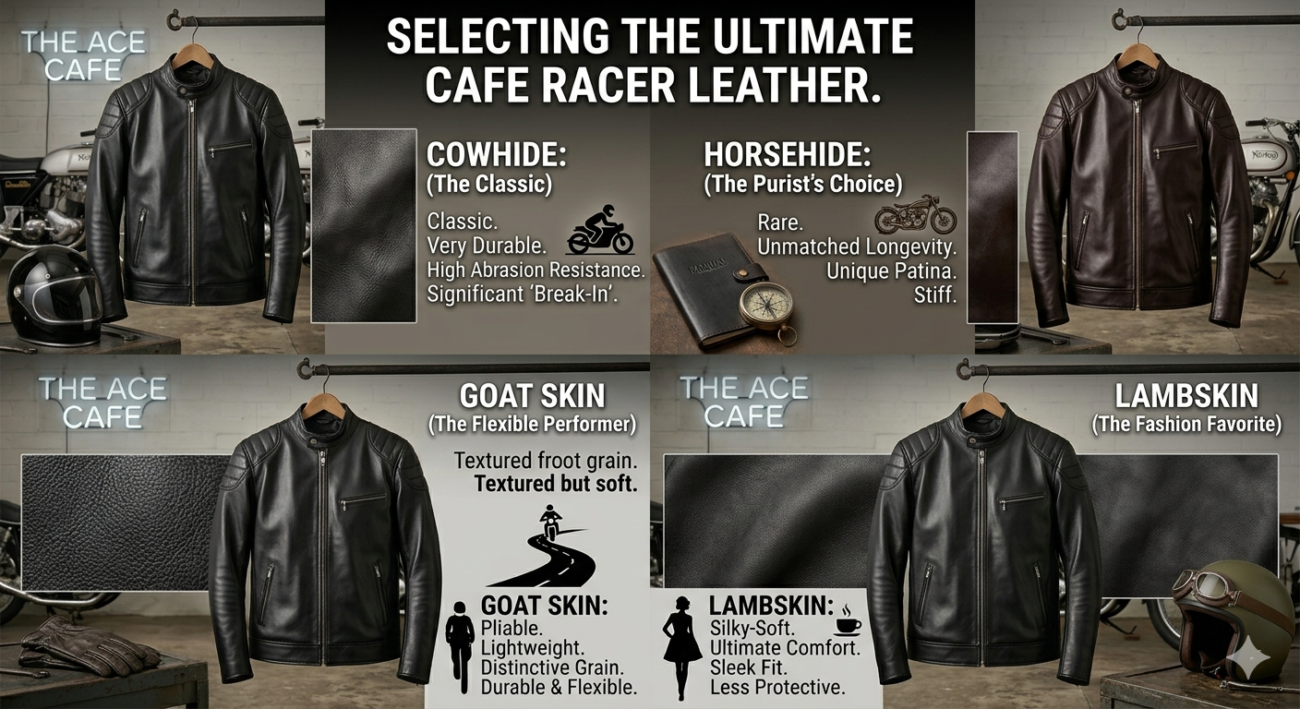
Cowhide is the most durable option. It is abrasion-resistant, holds its shape well, and develops a deep, rich patina over years of wear. Most heritage cafe racer jackets are built in cowhide for these reasons. Expect a break-in period of four to six weeks of regular wear before the leather fully conforms to your body. After that, it fits like a second skin.
Lambskin is softer and lighter. It drapes immediately and feels comfortable from the first wear. The trade-off is reduced abrasion resistance. Lambskin is ideal for daily city wear rather than serious riding.
Goatskin sits between the two. It has a naturally pebbled grain that ages distinctively, handles wear well, and tends to be lighter than heavy cowhide. For riders who want one jacket that genuinely covers everything, goatskin is often the answer.
One detail most marketing leaves out: hide thickness matters as much as hide type. A 1.2mm cowhide will feel noticeably thin compared to a 1.4mm or 1.5mm hide. Quality brands disclose this number. If you are shopping for a moto leather jacket and the product page does not specify hide thickness or leather type, that absence is telling you something.
How Should a Cafe Racer Jacket Fit?
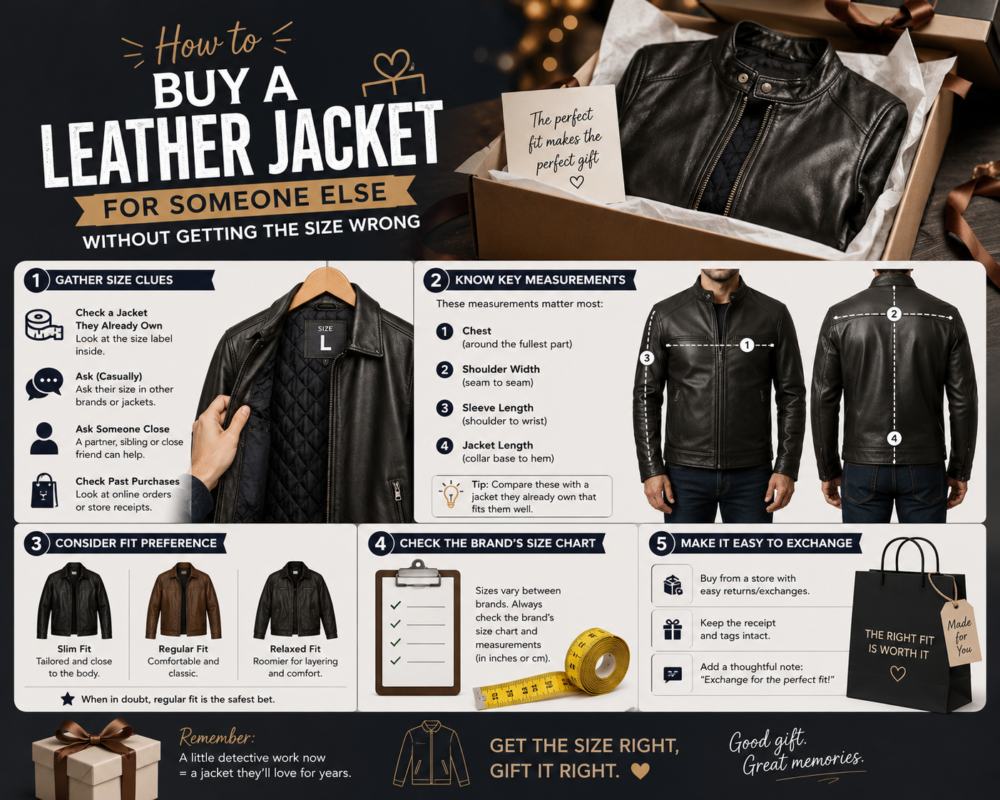
A cafe racer jacket should fit close and clean but never restrictive. Here are the exact checkpoints.
- Shoulder seam. It should land precisely at the edge of your shoulder bone. No drooping. No pulling upward. Exact placement is critical for both appearance and riding comfort.
- Chest. You should be able to zip the jacket fully without strain and take a deep breath without feeling compressed. If you feel pressure at the chest when fully zipped, go up one size.
- Sleeves. They should end at the wrist bone. If you plan to ride, half an inch of additional length helps because riding posture pulls the sleeves back toward the elbow.
- Body length. The jacket should typically hit at or just below the belt line. This is the classic moto proportion.
- Layering room. You should have space for a T-shirt plus a thin sweater or hoodie underneath. If you can only layer over a bare T-shirt, the jacket is too small for year-round practical wear.
The most common mistake people make: sizing up to create a relaxed look. A cafe racer that is one size too large loses its silhouette entirely. If you want a more relaxed, oversized fit in leather, look for a jacket intentionally cut that way. Do not mistake a large for a relaxed cafe racer.
Is a Cafe Racer Jacket Good for Motorcycle Riding?
Yes, but it depends entirely on how the specific jacket is built.
Not every cafe racer jacket on the market is designed for impact protection. Many are fashion pieces that reference the style without the construction. Before you ride in one, you need to know which type you are wearing.
For genuine riding protection, look for CE certification under EN 17092, the European standard for motorcycle protective clothing. CE Level 1 provides basic protection. CE Level 2 provides a higher level of protection. Some jackets come with armor already installed at the shoulders and elbows. Others have armor pockets designed to accept your own CE-rated inserts.
A genuine riding cafe racer jacket will use heavier leather: typically 1.3mm to 1.5mm cowhide. It will have reinforced stitching at all stress points and seams constructed to handle impact loading.
The original Ton-Up Boys rode in heavy leather. That was not a style choice. It was the only thing standing between them and the road.
If your jacket is a fashion piece, enjoy it as one. Wear it off the bike. It will look sharp. But do not assume a thin lambskin fashion jacket provides riding protection because it happens to have a center zip.
How Do You Style a Cafe Racer Jacket?
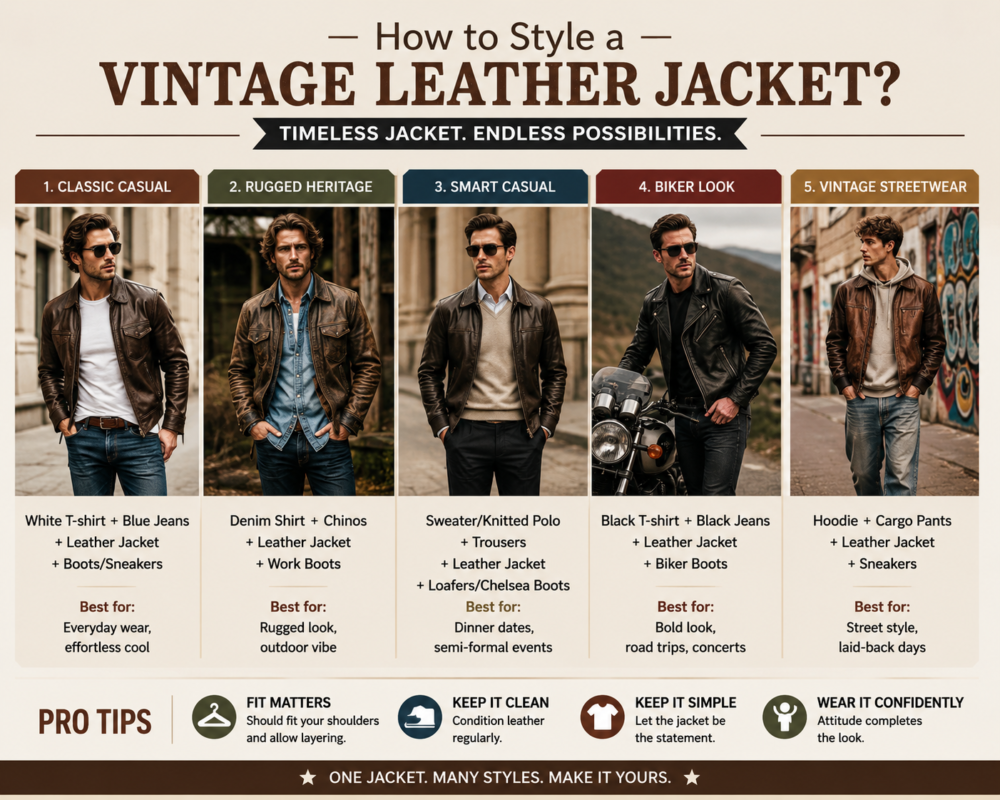
The cafe racer jacket is one of the most versatile leather jackets you can own. Here are five outfit formulas that have worked for decades and will continue to.
- The classic. Black cafe racer jacket. White tee. Dark slim jeans. Leather boots. This combination has not aged in sixty years. It will not start now.
- Smart casual. Brown cafe racer jacket. Fine knit sweater or turtleneck. Tailored chinos. Chelsea boots. The clean collar of a cafe racer reads well against elevated basics in a way a lapel-heavy jacket does not. The absence of hardware lets the other pieces breathe.
- Streetwear. Black or dark brown cafe racer jacket. A hoodie with no loud graphics. Relaxed jeans or cargos. Chunky sneakers or boots. The jacket becomes the structured, premium layer that upgrades everything underneath it.
- Workwear heritage. Brown, whiskey, or distressed cafe racer jacket. A flannel or denim shirt. Raw denim. Moc-toe boots. Lean into the texture contrast. This look is built on quality materials sitting next to each other.
- Monochrome. Black jacket. Black tee. Black jeans. Black boots. Simple. High impact. Works in photos and works at night. The stand collar breaks up the monochrome just enough to keep it interesting.
For deeper outfit ideas across jacket styles and occasions, our guide on what to wear with leather biker jacket covers the full range of pairings worth knowing.
How Do You Choose a Quality Cafe Racer Jacket?
Focus on construction. Not how it looks on a hanger. Not the brand name on the tag. Construction.
- Check the stitching. On a quality jacket, you should see eight to ten stitches per inch. Fewer stitches per inch means weaker seams that will fail earlier. Stress points at pockets, cuffs, and zipper ends should be double-stitched or bar-tacked for added security.
- Check the zipper. Pull it in one smooth stroke. It should glide without catching or stiffness. The hardware should feel substantial, not hollow. A zipper that fails on a cold road at 4am is not a style problem.
- Check the lining. Gently pull it at a seam. It should feel secure, smoothly finished, and cleanly stitched throughout. Cheap linings are almost always the first component to fail on a budget jacket.
- Demand transparency. At Outer Edition, we publish leather type, hide thickness, lining material, and care instructions on every product page. That level of clarity is the baseline standard. If a brand cannot tell you what their jacket is made of, that tells you what you need to know.
- Check the symmetry. Zip the jacket up. Look at it in a mirror. The collar, front panels, and pocket placement should be perfectly balanced. Asymmetry in a finished product is a manufacturing quality failure.
How Do You Care for a Leather Cafe Racer Jacket?
Wipe the jacket down with a dry cloth after each wear. If it gets wet, air dry it at room temperature. Do not use direct heat. Radiators and hair dryers crack leather. They are the fastest way to shorten the life of a good jacket.
Condition the leather two to three times per year using a quality leather conditioner. Apply it sparingly. You want the leather to absorb the product, not sit in a layer of it. Over-conditioning softens the structure of the hide and can cause it to lose shape.
Store the jacket on a wide, sturdy hanger. A thin wire hanger distorts the shoulder shape over months of storage.
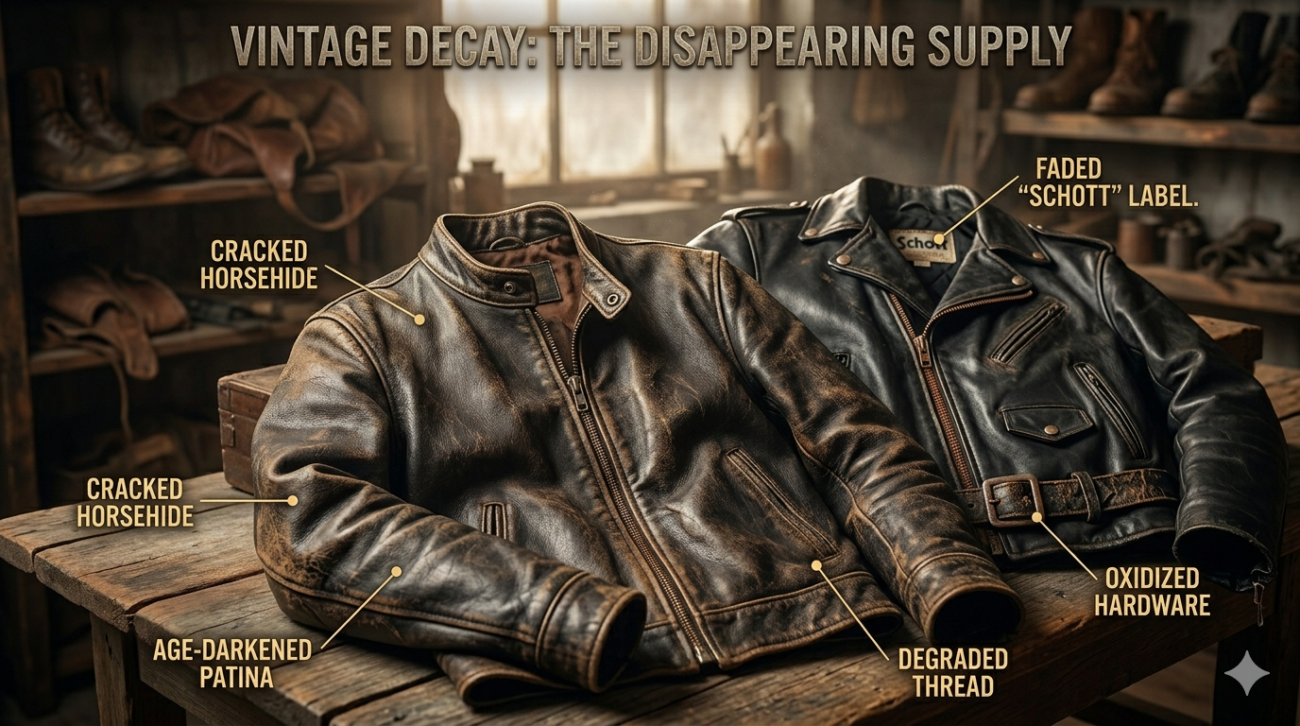
If you are working with a vintage moto leather jacket that has not been cared for, gentle rehydration is the first step. Start with a single light application of conditioner and give the leather time to absorb before deciding if it needs more. Old leather that has dried out for years should not be flooded with product on the first treatment.
Keep the jacket out of direct sunlight for long-term storage. UV exposure fades color and dries the hide progressively. A dark closet is better than a sunlit coat hook.
Why Outer Edition for Cafe Racer Jackets?
Outer Edition builds leather jackets for riders who take both performance and presence seriously. Every cafe racer jacket in the Outer Edition lineup is constructed with real riding in mind: quality hides at proper thicknesses, clean construction at the seams, and proportions that work whether you are leaning into a corner or walking into a room.
You will not find inflated materials claims or vague product descriptions here. Outer Edition specifies what matters because riders who know leather know to ask. The jackets are built to look better with every year you put them on. If you want a biker leather jacket that earns its place in your wardrobe over time rather than aging out in a season, Outer Edition is where the search ends.
Frequently Asked Questions
What is a cafe racer jacket?
A cafe racer jacket is a short, fitted leather jacket with a straight center zip, a stand collar, and minimal external hardware. It originated in 1960s Britain as riding gear for the Ton-Up Boys, a youth motorcycle subculture that raced between transport cafes at 100 miles per hour.
What is the difference between a cafe racer jacket and a biker jacket?
A cafe racer jacket uses a stand collar and a straight center zip. A classic biker jacket uses wide lapels and an angled diagonal zip. Cafe racer jackets are minimalist. Biker jackets carry more visible hardware and a louder aesthetic.
What leather is best for a cafe racer jacket?
Cowhide is the most durable and protective choice. Lambskin is the softest and lightest. Goatskin offers a strong everyday balance between durability and comfort. For riding, cowhide at 1.3mm or above is the right call.
Is a cafe racer jacket safe for motorcycle riding?
Yes, if it is built to CE protection standards under EN 17092. Look for CE Level 1 or Level 2 certification and confirm the jacket uses heavier leather with reinforced seam construction. Fashion versions of the jacket are not built for riding protection.
How should a cafe racer jacket fit?
The shoulder seam should sit exactly at the shoulder bone. The chest should close fully with room to breathe. Sleeves should end at the wrist bone. The body should accommodate a light mid-layer. Size up only if you feel compression at the chest.
Can you wear a cafe racer jacket off the bike?
Yes. The minimalist design of the cafe racer jacket makes it one of the most outfit-flexible leather jackets available. It pairs well with jeans, chinos, tailored trousers, hoodies, fine knits, and Chelsea boots alike.
What bikes are associated with the original cafe racer movement?
The Triumph Bonneville, the BSA Gold Star, and the Norton Manx were the most iconic machines of the 1960s Ton-Up Boys scene in Britain. These were lightly modified production bikes pushed to their mechanical limits on public roads.
How do you care for a leather cafe racer jacket?
Wipe down after each wear. Air dry at room temperature when wet. Condition two to three times per year with a quality leather conditioner, applied sparingly. Store on a wide hanger. Avoid direct heat and prolonged sunlight.