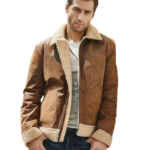
 Men’s Moto Leather Jackets
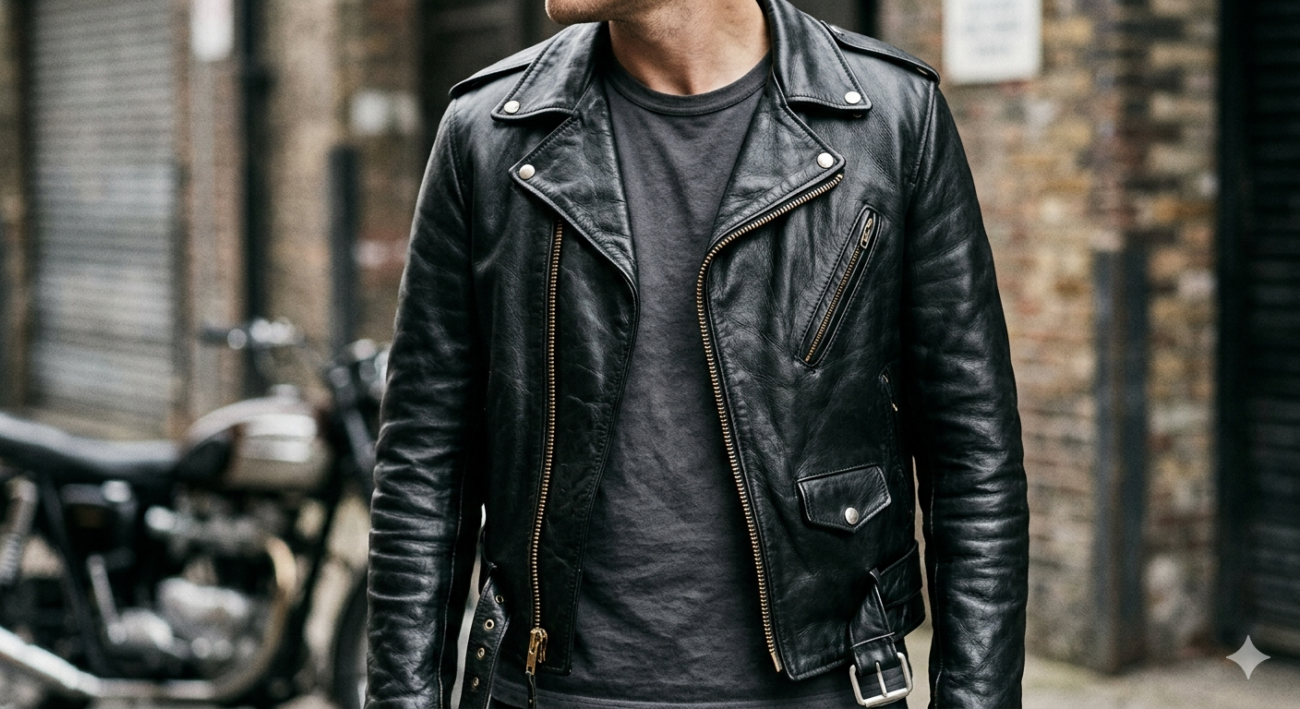
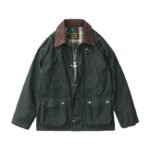 Faux Moto Leather Jacket
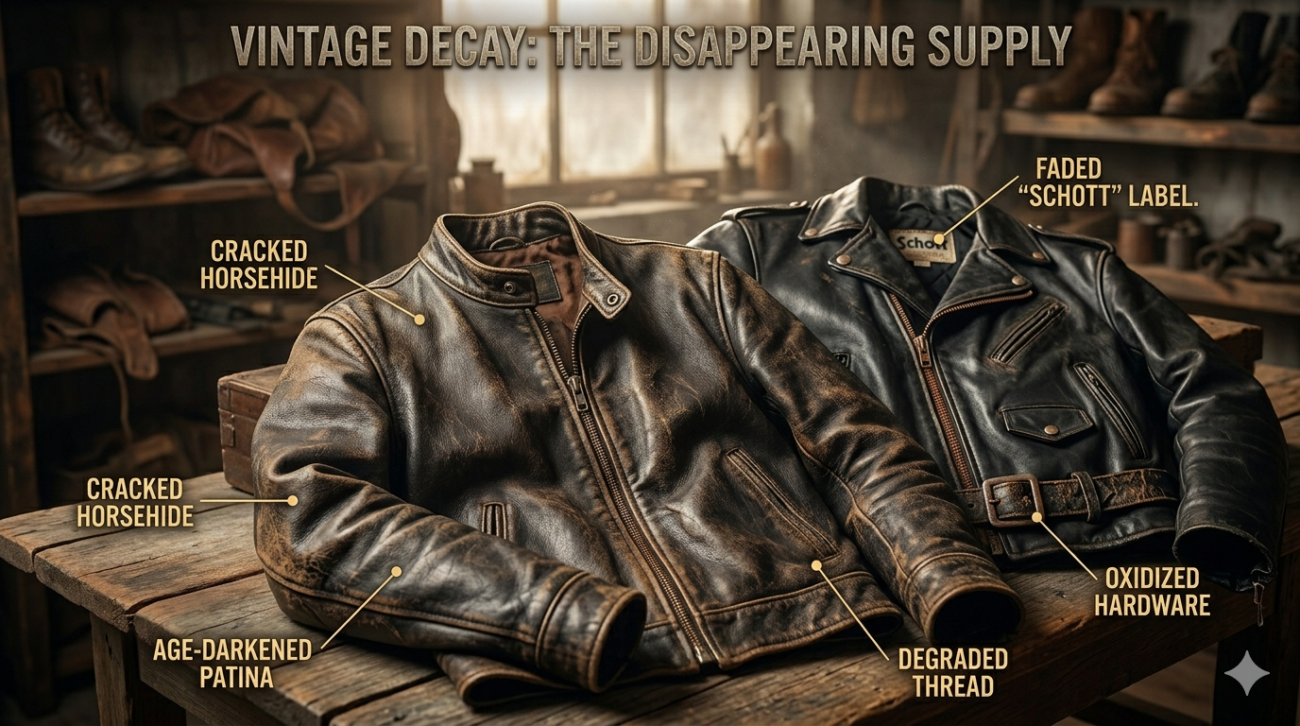
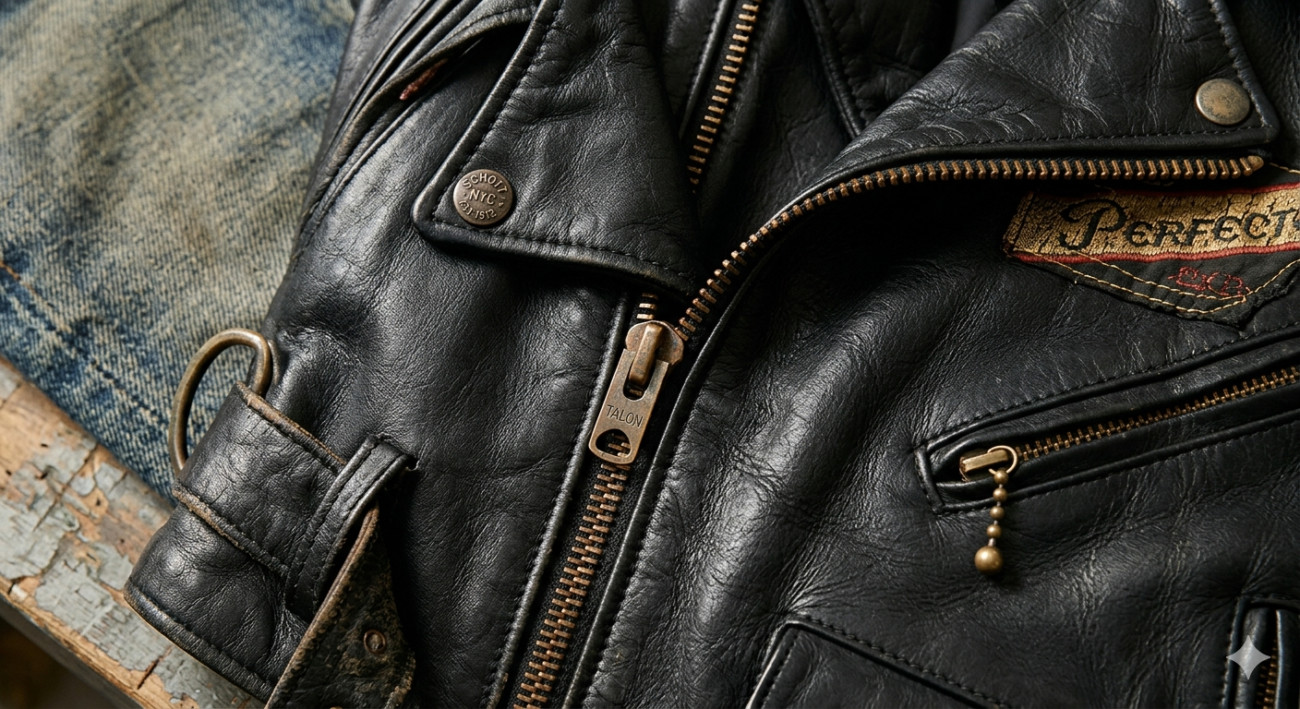
 Vintage Moto Leather Jacket
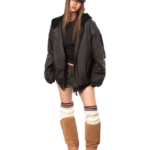 Women’s Moto Leather Jackets
 Faux Moto Leather Jacket
 Vintage Moto Leather Jacket Women
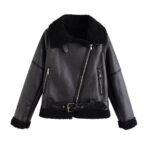 Cropped Moto Leather Jacket Women
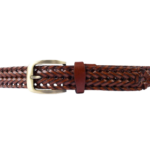 Men’s Leather Belts
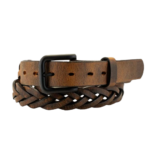 Full-Grain Leather Belt – Men
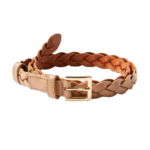 Braided Leather Belt – Men
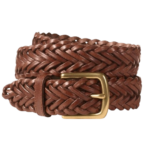 Leather Dress Belt – Men
 Leather Wallets
 Full- Grain Leather Wallets
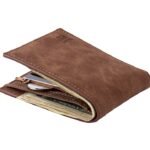 Tri-Fold Leather Wallets
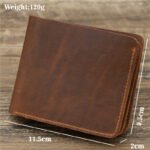 Saddleback Leather Wallets
 Moto Gloves
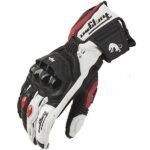 Moto Heated Gloves
Why Riders Are Switching to Faux Moto Leather Jackets in 2026

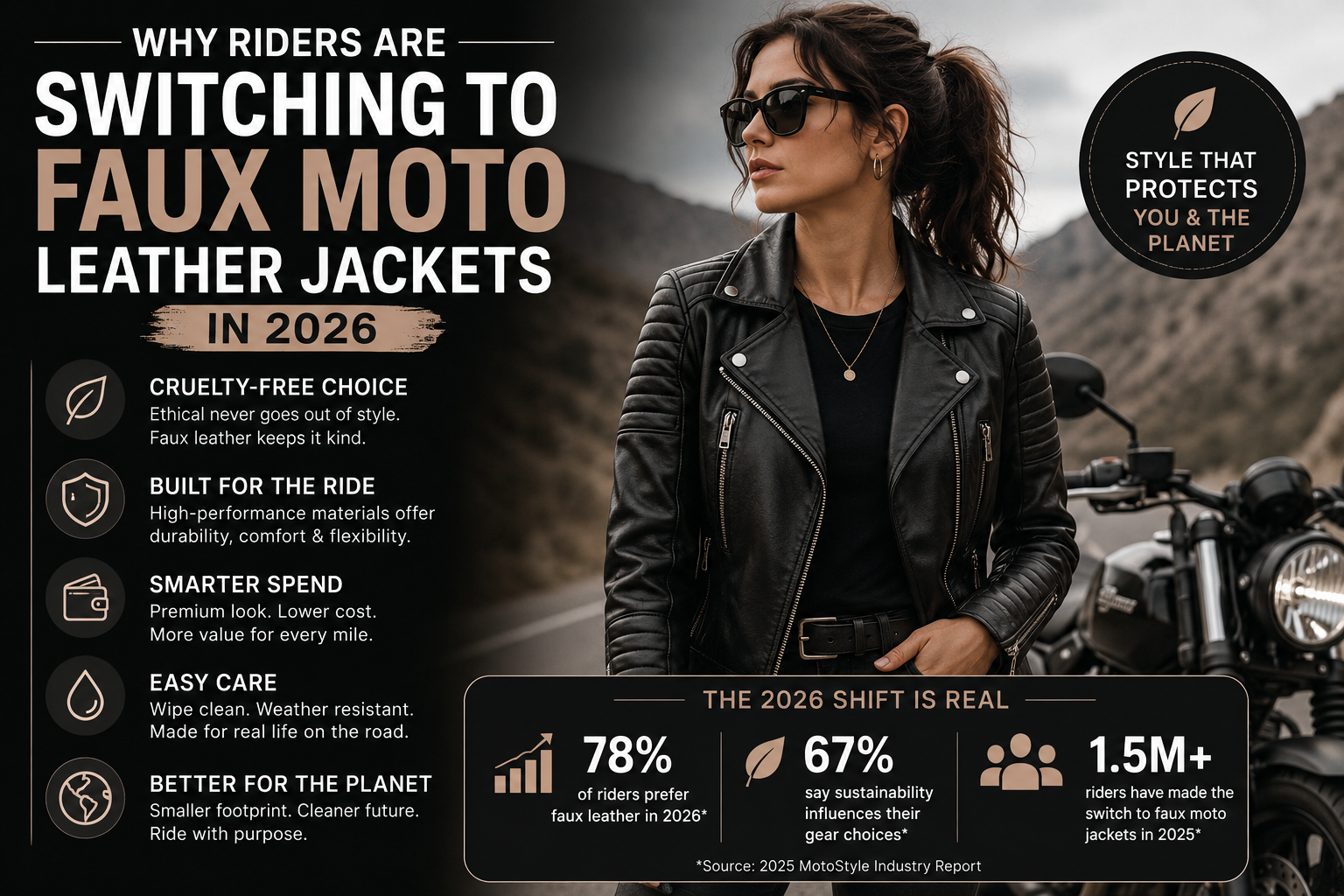
The relationship between riders and leather is long and not easily displaced. The moto jacket was born on the road, shaped by the needs of people who actually rode, and leather was the obvious choice because it worked: it resisted abrasion, shed wind, and held its structure season after season. For decades, any serious rider who showed up in a faux leather jacket was, at best, a weekend tourist.
That calculus has shifted. Not entirely — genuine leather still has a place in riding culture and a strong case for certain applications — but the reasons riders are choosing faux moto leather jackets in 2026 are grounded and worth understanding.
THE PRICE POINT HAS CHANGED THE MATH
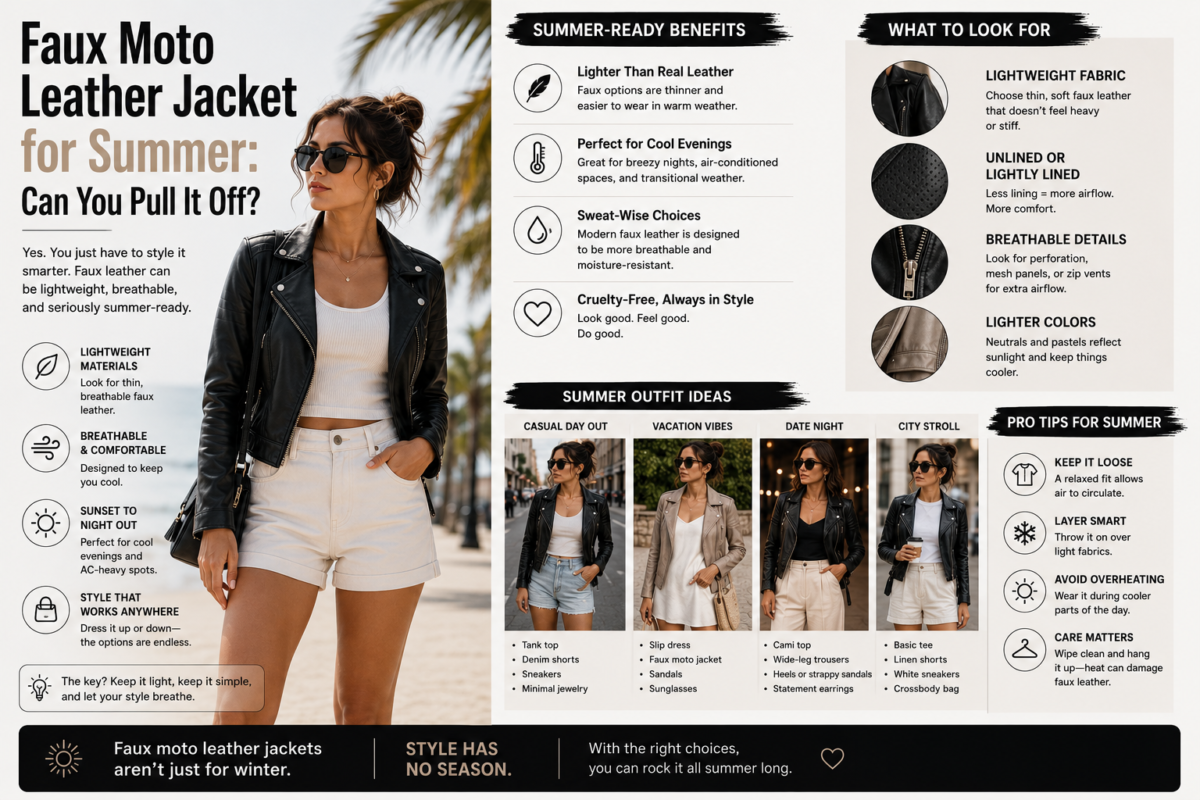
Entry-level genuine leather moto jackets start at a price point that puts them out of reach for casual or newer riders who have not yet committed to the lifestyle at a level that justifies the investment. A quality faux moto leather jacket can be acquired at a fraction of that price while delivering the look, the structure, and — for off-bike wear — the feel of the real thing.
For riders who use their jacket primarily for commuting in urban environments rather than touring or track riding, the functional argument for premium leather diminishes. If you are riding a motorcycle through city traffic and spending more time off the bike than on it, a quality faux leather jacket covers the aesthetic requirements without demanding the leather price premium.
THE MAINTENANCE REALITY
Genuine leather requires attention. It needs to be conditioned before first wear, re-conditioned seasonally, and treated with specific products to prevent drying and cracking. Riders who neglect this find their jackets aging poorly and cracking at stress points — collars, elbows, and zipper areas — within a few years.
Faux moto leather jackets require almost none of this. A wipe-down with a damp cloth handles most cleaning. There is no conditioning schedule, no concern about the jacket sitting in a cold garage all winter without treatment. For riders whose maintenance attention is already occupied by the motorcycle itself, this is not a trivial benefit.
ETHICS IS NOW A MAINSTREAM CONSIDERATION
In 2016, a rider who chose faux leather for ethical reasons would have been the exception. In 2026, concern about animal welfare and environmental impact has entered mainstream consumer decision-making in a way that would have been difficult to predict a decade earlier.
This does not mean every rider switching to faux leather has been converted by animal welfare arguments. But it does mean that, given comparable quality and aesthetics, many riders now actively prefer to avoid animal products — and the quality of faux leather has improved enough that the choice no longer involves a visual or functional concession.
THE QUALITY GAP HAS NARROWED
This is probably the most important shift. The faux leather available in 2026 is materially better than what was available a decade ago. The PU surface coatings are denser, more abrasion-resistant, and more convincingly textured. The backing fabrics are tighter and more supportive, reducing the surface delamination that used to characterize mid-range faux leather products.
The best faux moto leather jackets on the market today have a surface texture and drape that, in casual inspection, is indistinguishable from genuine leather. The hardware — zippers, buckles, D-rings — matches what you find on leather jackets at similar price points. The lining construction and stitching quality have improved alongside the materials.
This quality improvement has made the switch easier for riders who were previously unwilling to accept what they perceived as a visible downgrade. For many, that perception no longer holds.
THE IMPORTANT LIMITATION
Riders considering faux leather should understand one limitation that has not changed: genuine leather has better abrasion resistance in high-speed slide scenarios. If you are riding at speed and you go down, full-grain leather provides meaningful protective advantages that PU leather does not match.
For riders who prioritize protection above all else and ride in conditions where a crash is a realistic risk — touring, performance riding, track days — genuine leather remains the stronger technical choice for the jacket itself. (Though it should be noted that neither genuine leather nor faux leather is a substitute for CE-rated motorcycle armor at the shoulders, elbows, and back.)
For urban commuters, weekend riders, and those who wear their moto jacket primarily off the bike, the limitation is largely theoretical.
THE SHIFT IN RIDING CULTURE
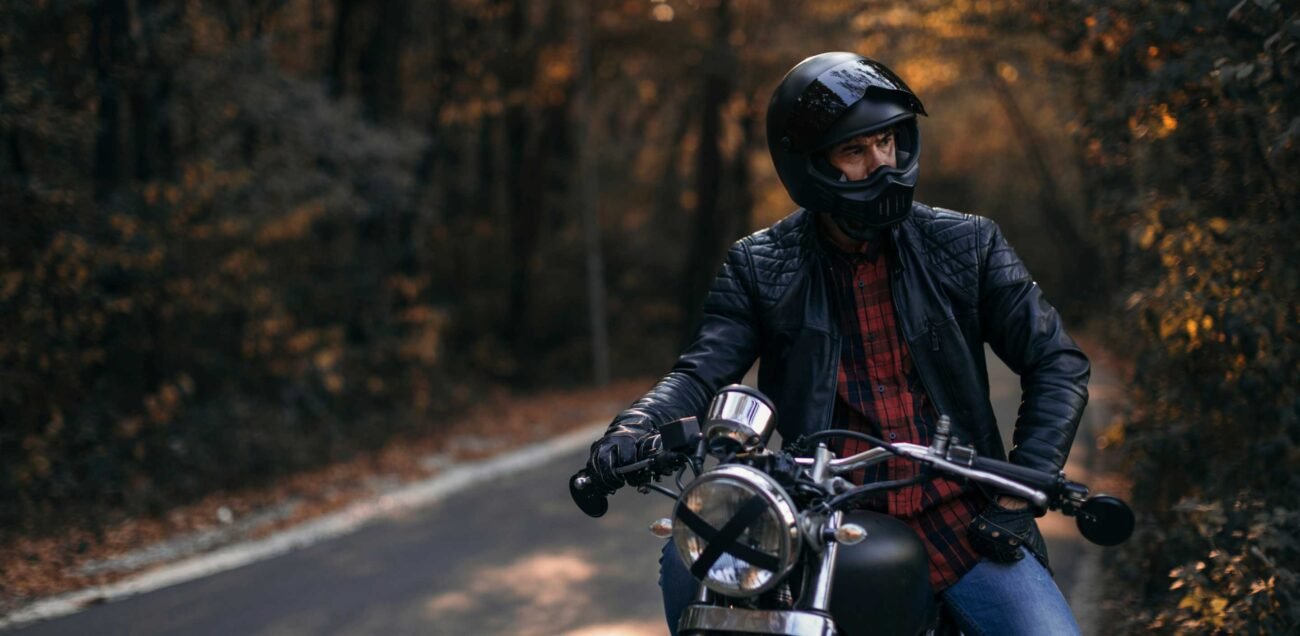
Riding culture in 2026 is more diverse than it has ever been. The demographics of motorcycle ownership have broadened, the aesthetic expressions within riding culture have multiplied, and the gatekeeping that once policed what a “real” rider wore has largely broken down. A rider who shows up in a faux leather jacket is not making an apology — they are making a choice that, in many cases, is better suited to how they actually ride and live.
OuterEdition‘s faux moto leather jackets and vintage moto leather jacket are built for this reality: the structure and aesthetic of the moto jacket, delivered in materials that fit the way modern riders actually use them.