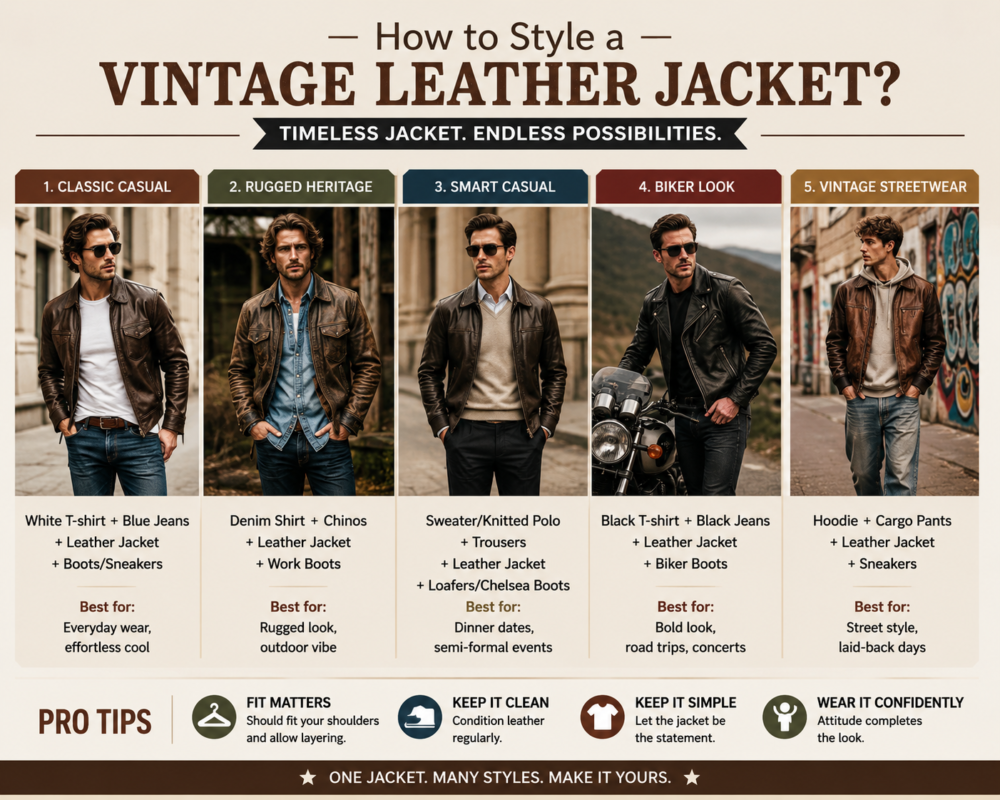
 Men’s Moto Leather Jackets
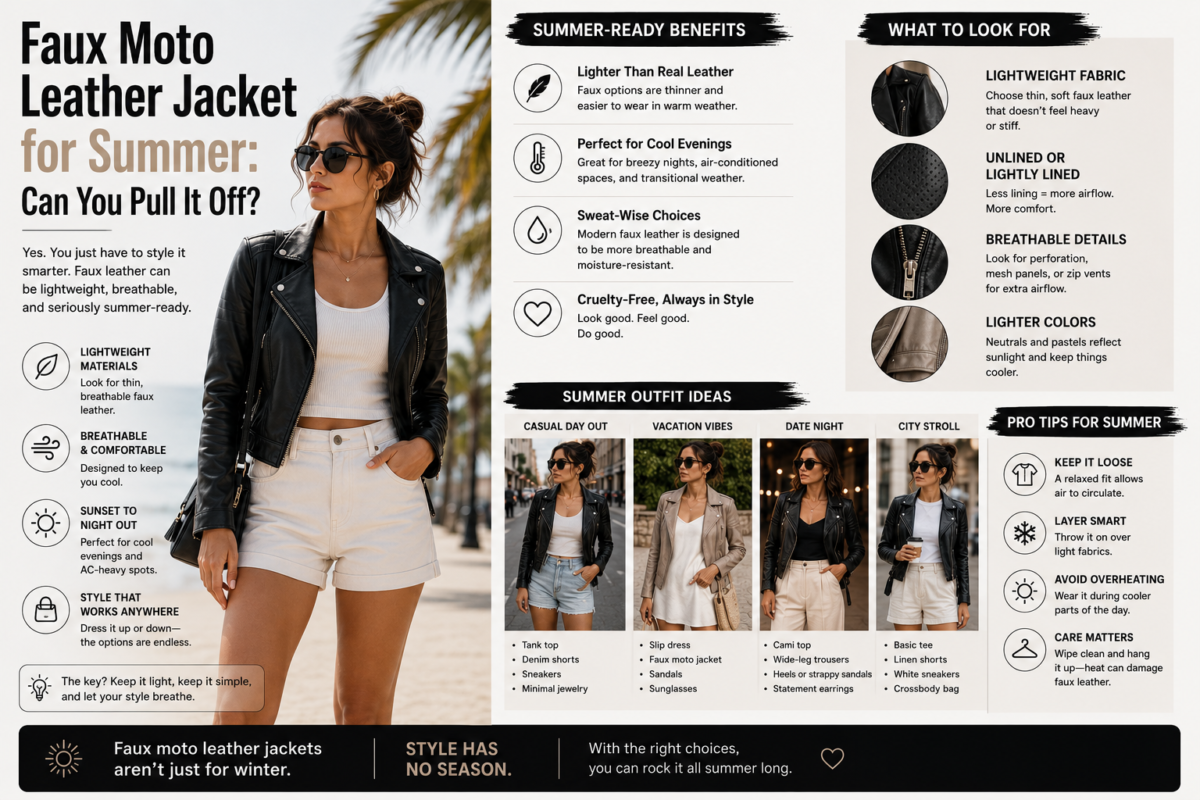
 Faux Moto Leather Jacket
 Vintage Moto Leather Jacket
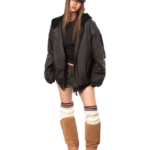 Women’s Moto Leather Jackets
 Faux Moto Leather Jacket
 Vintage Moto Leather Jacket Women
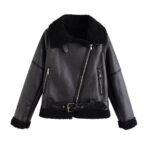 Cropped Moto Leather Jacket Women
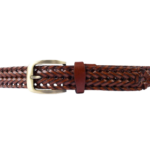 Men’s Leather Belts
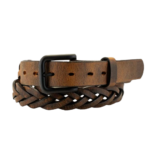 Full-Grain Leather Belt – Men
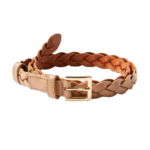 Braided Leather Belt – Men
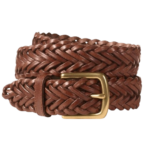 Leather Dress Belt – Men
 Leather Wallets
 Full- Grain Leather Wallets
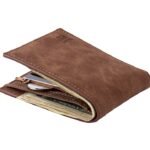 Tri-Fold Leather Wallets
 Saddleback Leather Wallets
 Moto Gloves
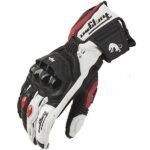 Moto Heated Gloves
What the Hardware on a Vintage Moto Jacket Tells You About Its Age and Value

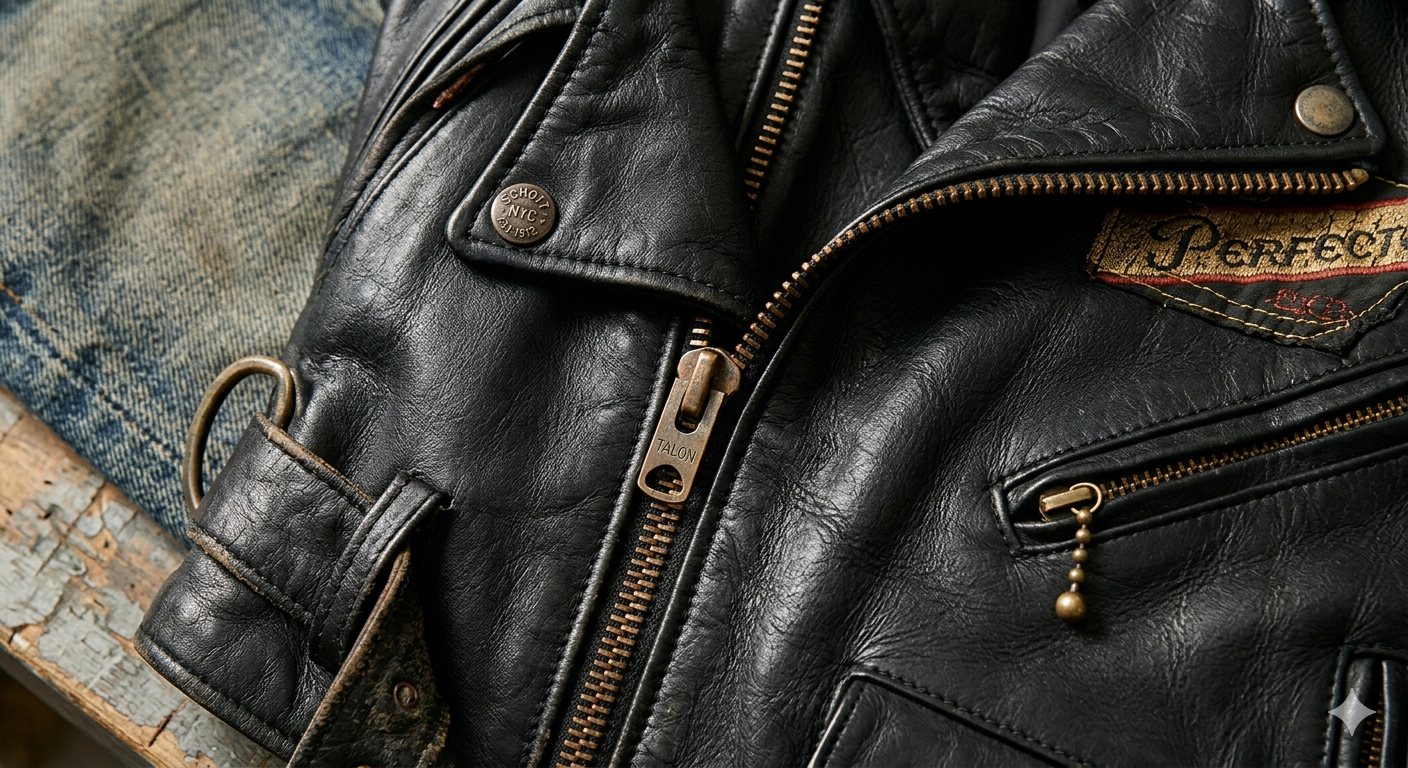
Most buyers look at the leather first. That’s understandable — leather is the dominant material, it’s what you’re paying for, and it’s the most visible indicator of quality. But experienced collectors and dealers look at something else first: the vintage motorcycle jacket hardware.
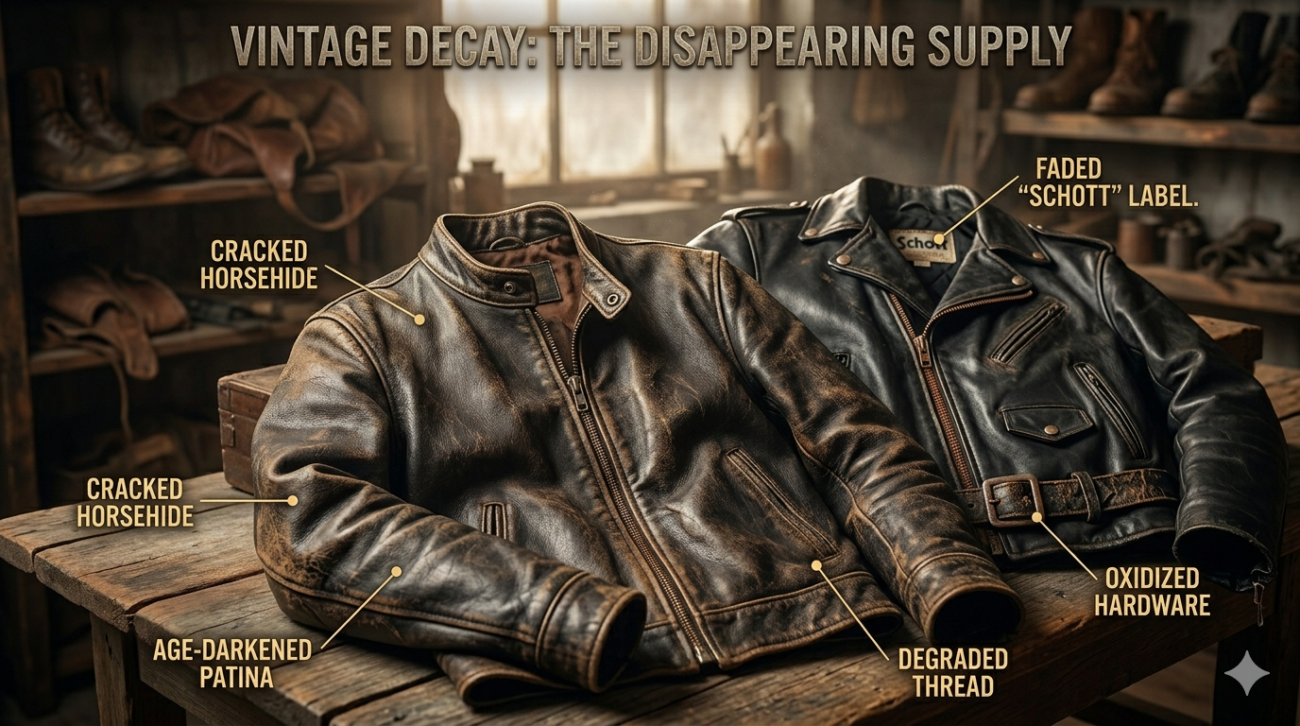
Zippers, snaps, buckles, and rings are the dating fingerprints of a vintage jacket. They’re harder to fake, harder to replace convincingly, and harder for sellers to obscure than the leather itself. Understanding the hardware is how you authenticate, date, and value a vintage piece with confidence — without needing a decade of tactile experience with leather grades.
—
Why Hardware Dating Works
Leather can be treated, dyed, conditioned, and refinished in ways that obscure its age and original quality. Hardware can’t. A Talon zipper from 1956 is a Talon zipper from 1956 — the manufacturing marks, the stamp on the pull, the construction of the teeth are all period-specific and cannot be convincingly reproduced at low cost.
This is why moto jacket zipper quality is the first thing serious buyers examine when they pick up a potential purchase. It’s the most reliable independent verification of what the seller is telling you about age and origin.
The secondary benefit: hardware condition tells you about the jacket’s use and care history in ways that leather can obscure. Leather can be reconditioned. Hardware that’s been abused, corroded, or improperly cleaned shows it. Hardware in excellent original condition — patinated but intact, functioning smoothly — tells you the jacket was treated well.
—
The Zipper: The Primary Dating Tool
For American vintage moto jackets, three zipper names matter: Talon, Conmar, and Crown. Understanding these names and their production periods gives you a working timeline for any vintage jacket.
Talon. The gold standard of American zipper production. Talon zippers were manufactured by the Meadville, Pennsylvania-based company (originally Hookless Fastener Company) from the 1930s onward. For vintage moto jacket authentication, Talon zippers are almost exclusively associated with pre-1970 production. The brand name is stamped on the slider pull — look for “TALON” in capital letters. Earlier Talon zippers (1930s–1950s) have a heavier, more solid construction; later ones are still quality but slightly lighter. Finding a Talon zipper is strong evidence of a pre-1970 jacket.
Conmar. The Conmar zipper company operated primarily in the 1940s–1960s. Their zippers appear on quality American garments of the era and are a reliable period indicator. Slightly less common than Talon on moto jackets specifically but present on confirmed originals.
Crown. Another American manufacturer present from the 1930s onward. Crown zippers are well-made and appear on quality vintage pieces, though they’re somewhat less associated specifically with the moto jacket category.
What you don’t want to find on a supposed pre-1970 jacket: any zipper from a Japanese or European manufacturer (YKK, Opti, Riri) or unbranded hardware. YKK, despite being an excellent zipper company, didn’t become dominant in American garments until the 1970s–1980s. Its presence on a jacket someone is selling as a 1958 piece is an immediate flag.
—
Snaps and Their Significance for Biker Jacket Buckles and Snaps
The snap closures on a vintage biker jacket — on the collar, storm flap, cuffs, and sometimes the waist — are another dating resource that most buyers overlook.
Scovill was the dominant American snap manufacturer for quality garments through the postwar era. Their snaps appear on confirmed Schott, Buco, Beck, and other American moto jackets from the 1940s–1960s. The Scovill name or manufacturing mark may be stamped on the snap post or cap.
What to look for in snap quality regardless of maker: solid metal construction (not stamped thin sheet), a clean closure that engages with a satisfying click and holds securely, and even patina across all snaps on the jacket. Replacement snaps are common on older jackets — a single snap that looks newer or has different hardware finish than the others is a replacement, which may or may not affect value depending on how well it was done and whether it matches the originals.
Snap corrosion is worth examining carefully. Some surface patina on vintage hardware is expected and desirable. Actual corrosion — pitting, structural degradation, snaps that don’t close cleanly — indicates the jacket was stored badly at some point, often in moisture. This affects both functionality and value.
—
Buckles, D-Rings, and Adjustment Hardware
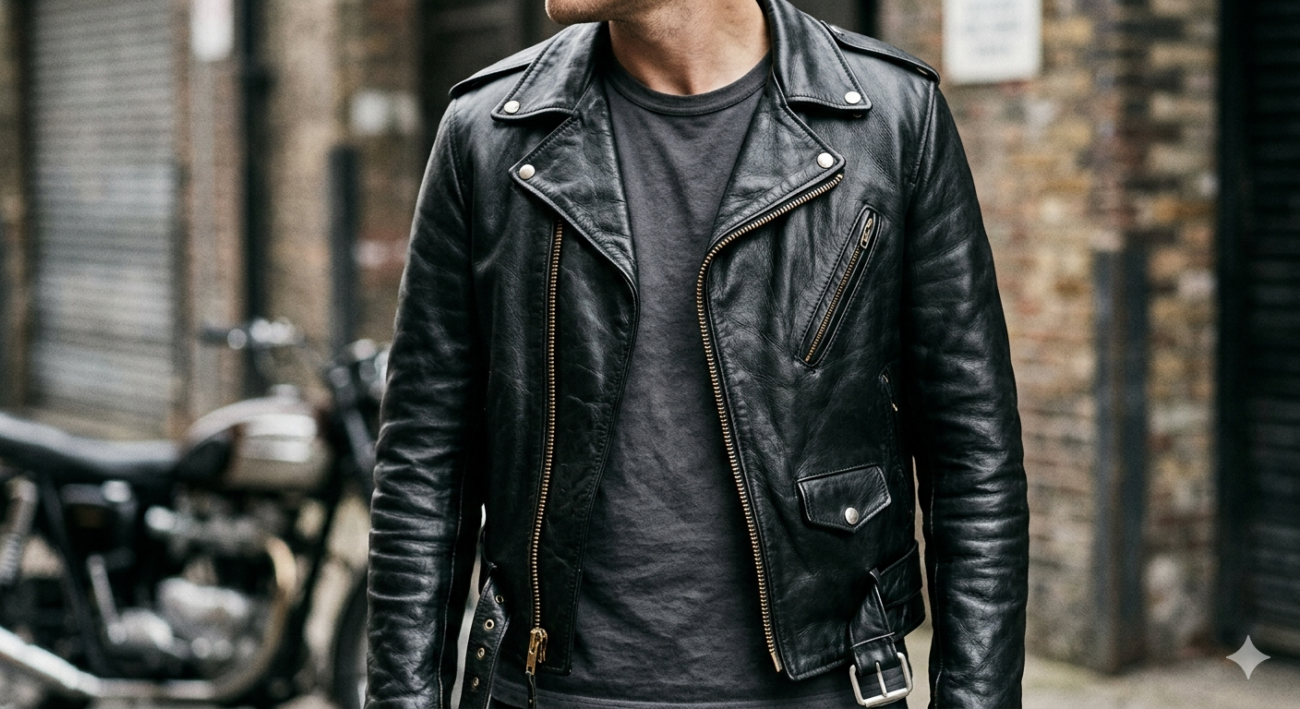
Proper vintage moto jackets — particularly those in the Perfecto tradition — include a waist adjustment strap with a buckle, and often D-rings on the belt or epaulettes for attachment points.
Quality period hardware on these elements is cast or forged metal — solid, heavy for its size, with a surface quality that shows genuine metalwork. Run your thumbnail across the surface: cast hardware has a texture and solidity that stamped sheet metal lacks.
The buckle style also dates the jacket. Early American production used simple roller buckles or box buckles with specific profile characteristics. The exact buckle style used by Schott or Buco in 1955 versus 1965 is well-documented among serious collectors and can help narrow a date range.
You can examine the [authentic leather jacket details](/shop/details) on our current inventory to see what quality hardware looks like in practice — the specifications on vintage-quality hardware are documented on each piece.
—
What Replacement Hardware Tells You
Virtually every vintage jacket on the market has had at least one hardware element replaced at some point. This is normal, expected, and not automatically a problem — but it’s information.
A replaced zipper on an otherwise original jacket doesn’t mean the jacket is fake. It means the original zipper failed (or was perceived as failing) at some point in the jacket’s life, and a previous owner had it replaced. The question is: replaced with what?
A period-correct or high-quality replacement that matches the original hardware profile affects value less than a cheap replacement that visibly doesn’t match. A jacket where the main zipper has been replaced with a contemporary YKK but all other hardware is original 1950s Scovill snaps and cast belt hardware is still a jacket with significant original material.
The vintage leather jacket authentication framework treats hardware comprehensively — assess all elements, note replacements, and value the package as a whole rather than disqualifying a piece on a single replacement in an otherwise original jacket.
—
Practical Hardware Examination Protocol
When you’re evaluating a jacket — in person or through detailed seller photographs — here’s the sequence:
1. Main zipper: Find the brand stamp. Confirm period-appropriate manufacturer.
2. Zipper function: Pull and release. Should move smoothly with real mechanical resistance. A zipper that feels light and plastic-y is a later replacement.
3. Collar snaps: Check manufacturer stamp if visible. Confirm all match each other.
4. Cuff snaps: Same check. Compared to collar snaps, all hardware should match unless there have been replacements.
5. Belt buckle: Weight it in your hand if possible. Solid cast metal versus stamped sheet is immediately apparent.
6. D-rings (if present): Solid ring construction, appropriate patina.
7. Overall patina consistency. All hardware should show similar aging unless replaced. Hardware that’s uniformly more or less patinated than the leather has a story to tell.
Browse our hardware jackets to see this standard applied to current inventory — every piece we carry has been examined against this framework.
—
The Collector’s Advantage
Hardware literacy separates buyers who occasionally get lucky from buyers who consistently acquire well. The leather requires tactile experience that takes time to develop. Hardware dating is learnable from documentation and verification — you can get proficient at zipper identification in an afternoon of research.
Once you have it, you’ll never evaluate a vintage jacket the same way again. The hardware tells the truth even when everything else is trying to tell you a story.
Browse Outer Edition’s leather jacket craftsmanship details to deepen your knowledge of what quality construction looks like at every level — hardware is the beginning, not the end, of the evaluation.